








Abstract
- Gold has historically maintained low correlations with both stocks and bonds across a range of macroeconomic environments, and the asset provides diversification benefits to portfolios.
- Importantly, diversification benefits can persist even during environments that are unfavorable for gold prices, demonstrating its role in strategic portfolio allocation.
- Over the last 1-, 5-, and 10-years, the diversification benefits of gold stand out. The 60/35/5 (stocks/bonds/gold) allocation outperformed the 60/40 (stocks/bonds) across all periods, both on an absolute and risk-adjusted basis, with similar max drawdowns between the portfolios.
- Real yields can have an impact on gold prices, but do not fully capture its diversification benefits. Rising real yields typically pressure gold by increasing the opportunity cost of holding a non-yielding asset. However, history has shown that gold’s correlation with both stocks and bonds declines during these periods, highlighting the distinction between gold’s standalone return and its role as a portfolio diversifier.
- Gold also has an inverse relationship with the U.S. dollar. There are several factors that can lead to a weakening dollar, such as uncertainty around trade and tariff policy, anticipated rate cuts, and higher national debt. Since gold is denominated and traded in USD, a weakening dollar increases purchasing power for non-U.S. buyers and may support global demand.
- Since gold supply cannot be expanded through monetary policy, many investors may allocate toward gold, and other physical assets, to hedge against currency debasement and preserve real purchasing power.
Underlying Drivers of Gold’s Price
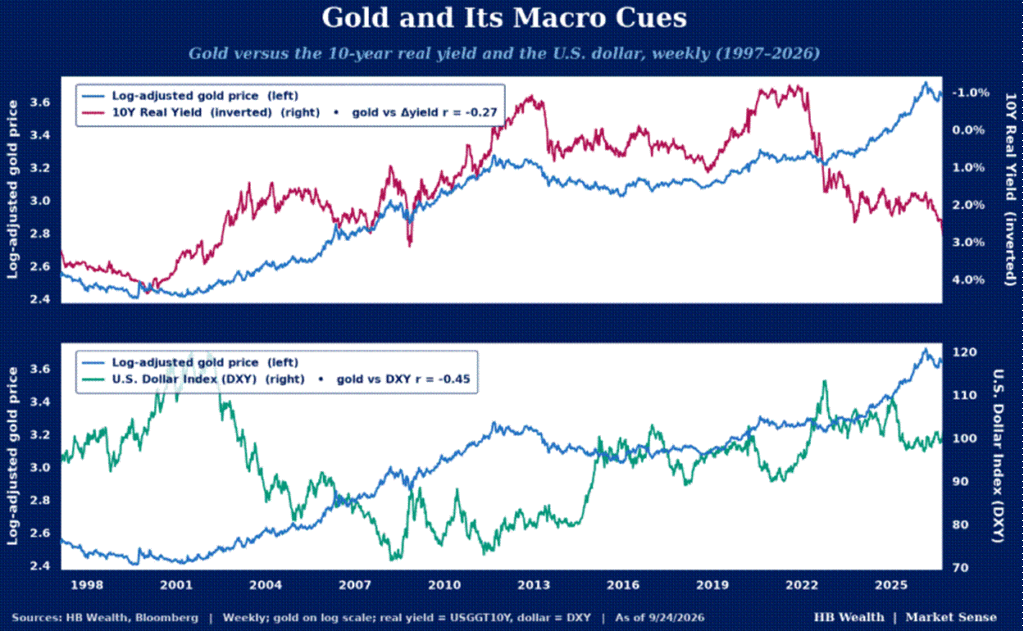
Since gold is not used as an industrial input like other precious metals, such as silver and copper, its price is more heavily impacted by macro and monetary conditions. The most observable of these is the inverse relationship gold has with both real yields and the U.S. dollar.
Nominal yields are composed of the real yield plus a premium for inflation expectations. The real yield rises when nominal yields increase faster than expected inflation and is typically driven by stronger economic growth, higher neutral interest rates, and heavier government or corporate borrowing which is expected to boost productivity and growth expectations. With higher rates on coupon paying assets, investors generally favor cash and/or U.S. Treasuries, as opposed to gold which does not pay any coupons.
The relationship with the U.S. dollar is also another driver for gold. De-dollarization trends, persistent fiscal and trade deficits, as well as central bank rate cuts often drive a weakening dollar. Because gold is globally traded and predominately USD-denominated, a weakening dollar generally supports the price of gold as it increases the purchasing power of foreign investors, thus potentially increasing global demand and boosting gold’s status as a scare, real asset alternative. Additionally, investors may view gold favorably in a weaker dollar environment as a hedge against currency debasement while potentially preserving real purchasing power.
Other drivers worth noting are periods of stress and geopolitical uncertainty, central bank demand, investment flows, and physical demand and supply. During periods of heightened risk and uncertainty, demand for gold often increases as a hedge and diversifier. Increased central bank purchases and investment flows can support the price of gold, even in periods of heightened real yields and a stronger dollar. Lastly, consumer demand and mine production can impact pricing.
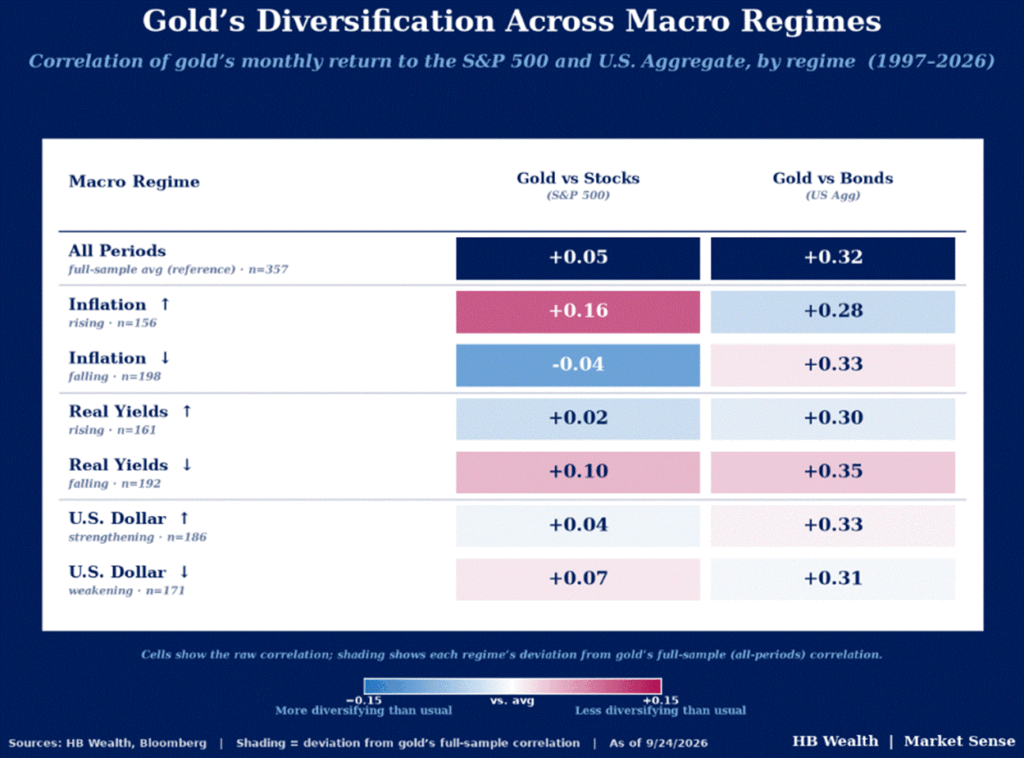
Gold’s Relationship to Traditional Assets Under Different Regimes
Gold has historically maintained low correlations with both stocks and bonds across different macroeconomic environments, supporting its role as a portfolio diversifier. Changes in inflation and the U.S. dollar produce modest shifts in these relationships: gold’s correlation with stocks tends to rise when inflation is increasing or the dollar is weakening, while its correlation with bonds generally moves in the opposite direction.
The diversification benefit becomes particularly pronounced during periods of rising real yields, when gold’s correlation with both stocks and bonds declines. This is notable because higher real yields can pressure both gold and bond prices, yet the magnitude and timing of their responses can differ as gold is influenced by additional factors such as the U.S. dollar, investor risk appetite, and central bank demand.
How Has Gold Performed in a Diversified Portfolio?
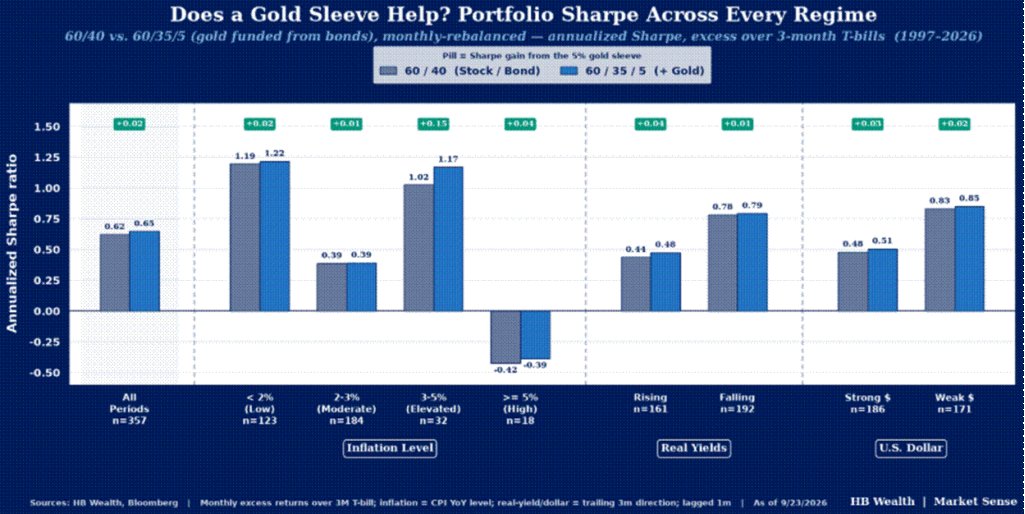
When thinking about the benefits of diversification, it’s helpful to look at the Sharpe Ratio, which is a risk-adjusted metric derived by taking the portfolio return over a risk-free asset divided by the portfolio volatility.
Comparing a traditional allocation of 60% stocks and 40% bonds (60/40) to an allocation of 60% stocks, 35% bonds, and 5% gold (60/35/5), the data suggests gold can be an effective diversifier. Across all periods and regimes, the Sharpe ratio was higher in portfolios with a dedicated gold sleeve. The most notable increase in the Sharpe ratio was observed in periods of elevated inflation (between 3% and 5%). This historical analysis suggests that gold may exhibit inflation-hedging characteristics during certain market environments.
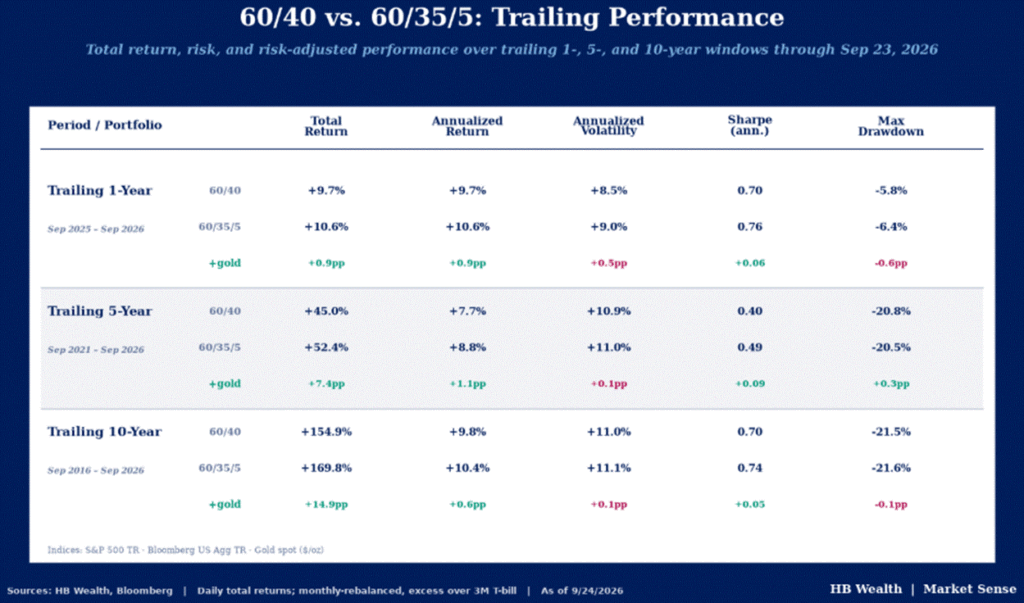
Evaluating the trailing 1-, 5-, and 10-year performance, the diversification benefits of gold stand out. The 60/35/5 allocation outperformed the 60/40 across all periods, both on an absolute and risk-adjusted basis, with similar max drawdowns between the portfolios.
Disclosure: HB Wealth is an SEC-registered investment adviser. The information reflects the author’s views, opinions, and analyses as of the publication date. The information is provided for informational purposes only and does not constitute an offer to sell, or a solicitation of an offer to buy any investment product. This information contains forward-looking statements, predictions, and forecasts (“forward-looking statements”) concerning beliefs and opinions with respect to future events and market conditions. Forward-looking statements involve risks and uncertainties, and undue reliance should not be placed on them. There can be no assurance that forward-looking statements will prove to be accurate, and actual results and future events could differ materially from those anticipated in such statements. The information does not represent legal, tax, accounting, or investment advice; recipients should consult their respective advisors regarding such matters. Certain information herein is based on third-party sources believed to be reliable, but which have not been independently verified. Historical market relationships, correlations, and performance characteristics discussed herein may not persist in future market environments. Investments in commodities and precious metals, including gold, involve risks and may experience significant price volatility. Asset allocation and diversification strategies do not assure profit or protect against loss in declining markets. Investors should consider their individual objectives, risk tolerance, and financial circumstances before making any investment decision. Past performance is not a guarantee or indicator of future results.