








AI model developers are discussing a slower pace of frontier model development as concerns about safety emerge, and markets are nervous this may materially alter the AI trade. While unusual to hear corporations openly advocate for slower growth, paced development may not necessarily be a bad thing for the market, or the economy at large. We see a slower model growth environment as an opportunity for leadership rotation within the AI trade in the short run, not an impediment to AI’s progress. While a slowdown may create a short period of volatility as presumed near term growth rates for AI spending beneficiaries are adjusted, a slower pace of growth could help prevent irrational exuberance from developing and effectively extend the AI cycle as well.
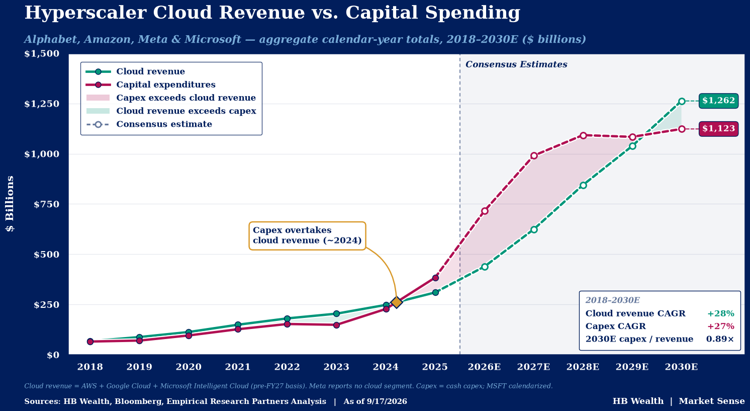
While the initial market response to AI developers’ suggestions of slowing down has been poor, there are several reasons to remain optimistic that a slower pace of development is not necessarily a bad thing. In the end, revenue per unit of capex is likely to determine the efficacy of the AI investment theme longer term, and a slower pace of development may allow AI firms to buy more time to monetize existing capabilities through a more extended model release cycle. Previous releases would be less likely to be cannibalized by newer models in a slower development cycle, and the pressure to spend on capability advancements may ease a touch for the frontier developers. Public backlash against data centers needed to support AI may likewise be reduced if the slowdown manages to improve safety and perceptions around AI, removing a key bottleneck to success. Monetization is key to AI’s development as an enduring investment theme, and necessary for continuation of the capital spending wave that is driving economic growth; if slowing the development pace produces stronger commercial results, there should be little complaint from the market.
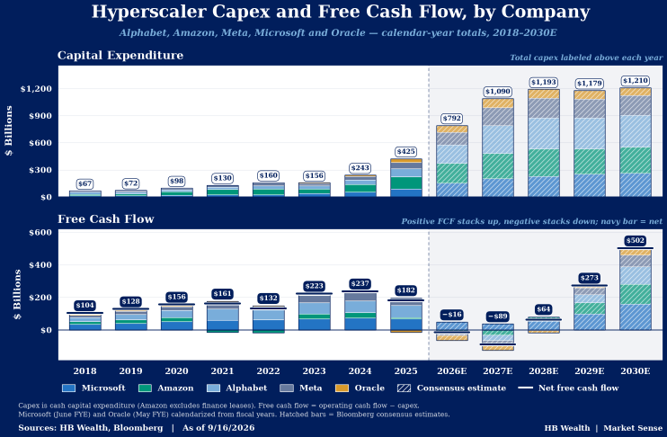
Early market movements support the view that the market impact of a slower AI model advance may look more like rotation than rout. While some of the big beneficiaries of the AI race, such as semiconductors, have suffered as a result of speculation that a slower pace of frontier model development may be ahead, some other tech names may benefit from the news. Cybersecurity and software companies have so far greeted the news with cheer, for example. This suggests that a slower pace of growth is not necessarily a problem for the entire industry – it may be more a story of another rotation – back out of beneficiaries and into spenders as the AI cycle reaches a new stage. We are watching Oracle particularly closely on this front, for it is the hyperscaler that has the deepest cash flow deficit given its “all-in” capital spending bet on AI. For now, steady improvement in the outlook appears to be emerging. The company’s earnings announcement last week suggested revenue growth is accelerating, and the stock is holding more than 20% above its lows touched in July. Anthropic’s IPO, tentatively scheduled for mid-October, and other hyperscaler earnings, set to kick off later that same month, should offer further signals to watch.
Disclosure: HB Wealth is an SECregistered investment adviser. The information reflects the author’s views, opinions, and analyses as the publication date. The information is provided for informational purposes only and does not constitute an offer to sell or a solicitation of an offer to buy any investment product. This information contains forward-looking statements, predictions, and forecasts (“forward-looking statements”) concerning the belief and opinions in respect to the future. Forward-looking statements involve risks and uncertainties, and undue reliance should not be placed on them. There can be no assurance that forward-looking statements will prove to be accurate, and actual results and future events could differ materially from those anticipated in such statements. The information does not represent legal, tax, accounting, or investment advice; recipients should consult their respective advisors regarding such matters. Certain information herein is based on third-party sources believed to be reliable, but which have not been independently verified. Past performance is not a guarantee or indicator of future results; inherent in any investment is the risk of loss.