








Abstract:
- Surging treasury yields are pressuring S&P 500 multiples, putting the onus on earnings to deliver on lofty forecasts.
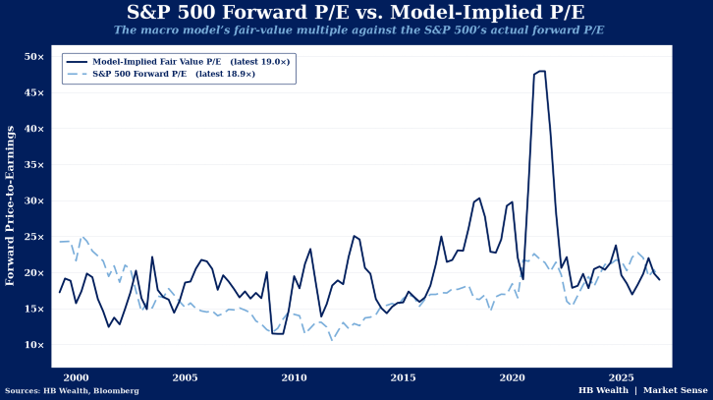
- Our model suggests stocks are currently fairly valued based on yields, credit spreads and consensus EPS growth forecasts.
- Misses could be troubling but the S&P 500 has beaten in all but one quarter since 2013 and our earnings model backs up robust consensus forecasts as long as recent economic tailwinds persist.
Treasury yields have been surging and rates have been pressuring S&P 500 multiples. Since late last October, the S&P 500 is up about 12.5%, but trailing and forward price/earnings multiples are down 1.7 and 4.1 turns, reflecting the rise in interest rates. Our models suggest that this recent trend – stock prices rising while valuations remain pressured – is unlikely to change. Even if rates continue to rise, earnings may continue to post blistering gains. Nonetheless, after the extreme surge in yields over the last six months, rates pressures on stocks may ease a touch in the near term, making earnings the primary risk to markets.
Valuation Model Says Stocks Now Accurately Reflect Higher Yields
The 2-year yield (4.83%), 10-year minus 2-year yield curve spread (48 bps), BAA spread (1.46%) and the average of the next four quarter consensus EPS growth forecasts (21.4%) are the key components of our model, which arrives at an implied 19x P/E for the S&P 500 – right in line with the 19x forward P/E, yet much lower than the current 24.4x trailing multiple. That suggests that earnings will have to at least hit consensus’ lofty bar for multiples to tread water. It also says that the index will be exposed to downside should earnings significantly miss expectations for robust growth.
If Growth Slows by Half, Stocks May be Troubled, but Current Cues Suggest That is Unlikely
The good news for the index is that since 2013, S&P 500 quarterly EPS growth has only missed preseason consensus forecasts once – in 1Q20 when the covid-19 pandemic effectively closed the economy – and registered an average quarterly beat by 633 bps. Given the fact that economic disruptions from the war in Iran and rising yields have been minimal thus far, an earnings miss seems highly unlikely in the short run.
Still, it’s worthwhile understanding how far multiples could slide should index earnings surprise in either direction. Holding yields and credit spreads constant at today’s levels, if the index were to only post 10% to 15% earnings growth over the next year, a 14.5x to 16.2x multiple would be justified based on our model. This is similar to lows touched during the 2022 bear market. Likewise, if the index were to post 0% EPS growth, multiples should be closer to 12x.
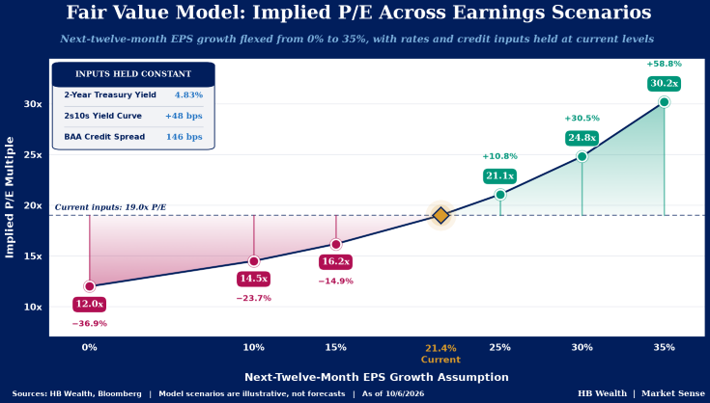
However, if earnings continue to rise at a very rapid pace, it could inject investors with a dose of confidence and push multiples higher. For example, if EPS rises 25% to 30%, holding rates and credit spreads constant, the S&P 500’s P/E could rise into the range of 21.1x to 24.8x. Our earnings growth model suggests earnings may rise nearly 24% over the next year, slightly below the current consensus forecast for 27.8%. This model assumes past year trends in new orders growth (up 12.5%), the 2-year yield (up 124 bps), the unemployment rate (down 20 bps), and the Bloomberg Commodities index (up 34.5%) will largely continue to arrive at this forecast.
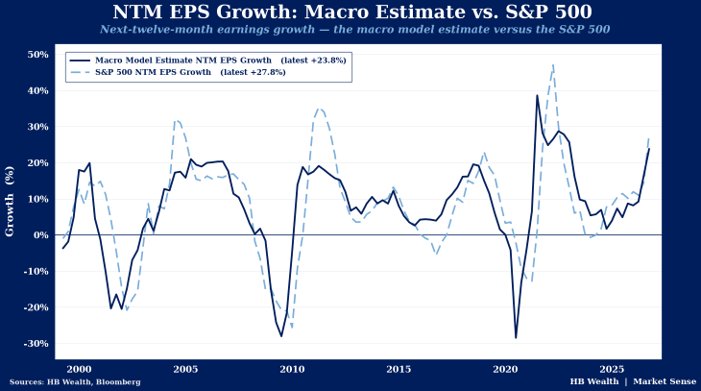
Reality is never as clean as models suggest, and in the current scenarios, changes in rates could unlock additional upside or downside for multiples. Nonetheless, earnings are a powerful driver of stock prices that cannot be ignored, and as long as the earnings story remains intact, the S&P 500’s recent trend of derating while still posting gains could continue – helping to reduce the cost of equity and ease lingering bubble concerns across equity markets.
Disclosure: HB Wealth is an SEC‑registered investment adviser. The information reflects the author’s views, opinions, and analyses as the publication date. The information is provided for informational purposes only and does not constitute an offer to sell or a solicitation of an offer to buy any investment product. This information contains forward-looking statements, predictions, and forecasts (“forward-looking statements”) concerning the belief and opinions in respect to the future. Forward-looking statements involve risks and uncertainties, and undue reliance should not be placed on them. There can be no assurance that forward-looking statements will prove to be accurate, and actual results and future events could differ materially from those anticipated in such statements. The information does not represent legal, tax, accounting, or investment advice; recipients should consult their respective advisors regarding such matters. Certain information herein is based on third-party sources believed to be reliable, but which have not been independently verified. Past performance is not a guarantee or indicator of future results; inherent in any investment is the risk of loss.