








Bond Vigilantes are the Captain Now as Fed Finally Capitulates.
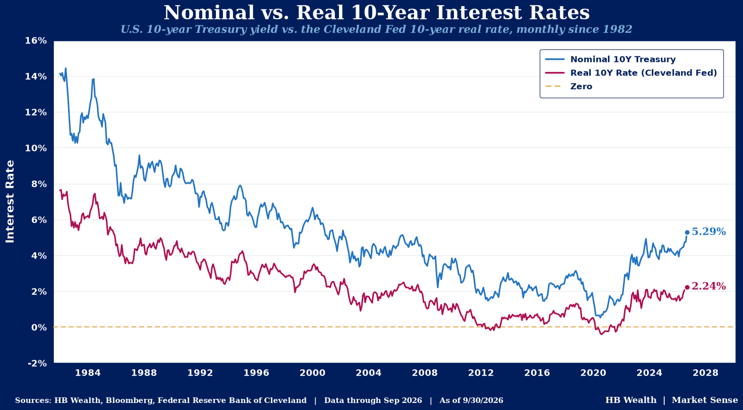
The Federal Open Market Committee’s hand was forced to hike this month as yields across tenors climbed north of 5%, and various measures of growth and inflation continued to run hot. Fortunately, signals of economic strength give the central bank some wiggle room for the Fed to attempt to blunt prices. Currently, the market is priced for another hike by the end of the year, followed by up to four in 2027. In Market Sense on September 15th, we suggest that rising yields are likely to weigh on equity multiples, somewhat offsetting the earnings surge supporting stocks. Likewise, we examine the effects of rate hike cycles on small caps, sectors and factors in Market Sense from September 17th. Though the Russell 2000’s direction may be dictated by the magnitude of any move in 10-year yields, value stocks have held up best over the past several hiking cycles and real estate, health care and communications struggled the most across capitalizations.
Rising Gas & Diesel Prices are Starting to Bite.
Fuel costs are surging and have begun hitting the earnings outlook for a swath of large cap companies. In our Market Sense from September 24th we detail that more than half of S&P 500 industries have faced cuts to 3Q EPS growth forecasts, as higher rates, waning tax refund support and higher fuel prices take a toll. Cuts have been led by the materials, consumer discretionary and staples sectors. Historically, retailers have been most sensitive to changes in diesel prices and surging fuel costs. However, based on the most recent experience in 2022, there’s still significant downside revision and derating risk if costs continue to surge.
IPO Calendar Remains Strong, for Now.
On September 10th we posted in Market Sense that the IPO calendar for the rest of the year appears exceptionally strong with 2026, having already met 2025’s number of new issues. However, recent market volatility and ongoing rate hikes are adding uncertainty to the outlook with Oura recently delaying their IPO. Nonetheless, the big fish of upcoming IPOs, Anthropic, still looks likely to go public this year, and this could help 2026 challenge the heights of the 2021 surge (the best year for IPOs on record). Recall that most index providers (excluding S&P) changed their rules to “fast-track” mega-cap IPOs, making Anthropic a near lock to enter most major indices in short order. IPO performance this year has been strong, but not strong enough, to raise alarm bells.
Investors De-Risk in September as Fed Drops the Rates Hammer.
September’s stock market performance can only be described as a de-risking as the Fed began a hiking cycle and bond yields surged. All capitalizations fell, though small caps were hit worst, down 5.4%, as the S&P 500 dropped roughly half a percent. Growth stocks rose and value fell in both large and mid-caps, though both styles took it on the chin in the Russell 2000 – hinting the month’s move is mostly about capitalization and risk. Tech was the only sector to post gains in the Russell 3000. Rate-sensitives like financials, real estate and utilities were among the month’s biggest losers, joined by materials and discretionary. Breadth has collapsed, with just 24.5% of US stocks trading above their 50-day moving average – a number that nearly challenges the low in March (20%). Other developed markets and emerging markets also teetered.
Oil Remains Elevated, Despite Drop on US-Iran Talks and Surge in Dollar.
West Texas Intermediate (WTI) crude hit $105/bbl mid-month and is still just above $90/bbl – more than 63% above the December low and in the 86th percentile since 1990. Oil is likely to remain extremely headline driven and volatile, and barring an imminent reopening in the Strait of Hormuz, may pressure the consumer outlook into the holiday season. The dollar surged back to test year-to-date highs, pressuring precious metal prices.
Silver Lining in Bonds’ Bear Market: Higher Starting Yield Helps Total Return.
Starting yields have historically been a useful indication of longer-term potential returns for fixed income. Even if rates continue to move higher from here, a starting yield of 5% offers investors income to offset the price decline that occurs as rates move higher, improving the total return prospect for bonds (Market Sense).
Credit Spreads Widen Slightly but Remain Tight.
As expected, the recent volatility has pushed corporate credit spreads out from their near record tight levels, but spreads remain tight based on historical norms, with high yield and investment grade spreads in their relative 16th and 8th long term percentiles, respectively. This, paired with elevated base yields, gives reason to keep notable credit risk on the shortest part of the curve.
Muni Selloff Amplified by Thin Liquidity.
September’s Muni market slumped roughly 5%, marking the largest monthly loss since 1987. The sharp rise in rates has been fueled by moves in the Treasury market driven by inflation concerns as well as fears of a hawkish Federal Reserve. Most municipal bonds still trade over the counter, so sharp moves can be amplified by thinner liquidity. Pairing low liquidity with large fund outflows makes a recipe for an outsized downside move.
Chart of the Month:
Disclosure: HB Wealth is an SECregistered investment adviser. The information reflects the author’s views, opinions, and analyses as the publication date. The information is provided for informational purposes only and does not constitute an offer to sell or a solicitation of an offer to buy any investment product. This information contains forward-looking statements, predictions, and forecasts (“forward-looking statements”) concerning the belief and opinions in respect to the future. Forward-looking statements involve risks and uncertainties, and undue reliance should not be placed on them. There can be no assurance that forward-looking statements will prove to be accurate, and actual results and future events could differ materially from those anticipated in such statements. The information does not represent legal, tax, accounting, or investment advice; recipients should consult their respective advisors regarding such matters. Certain information herein is based on third-party sources believed to be reliable, but which have not been independently verified. Past performance is not a guarantee or indicator of future results; inherent in any investment is the risk of loss.