








Market Sense: Economic and Market Research
By:



U.S. large cap stocks ended 2025 in rare valuations territory, with the cyclically adjusted PE ratio (CAPE) of 39.9 in the 99th percentile of all observations since 1881. US stock valuations by this measure are near 150-year highs, well north of the long-term average of 17.7, and even substantially higher…
Metals prices are breaking records so far in 2026, hitting new all-time price highs and recording rates of price change last touched in 1979. Back then, prices rose until higher interest rates and a painful recession emerged. This time, gold might continue to run until geopolitical stability or an effort…
The FOMC paused rate cuts in January, with stabilizing labor markets and inflation pressures offering little reason to ease more at the current time. They didn’t need to ease more to stay easy anyway – after three consecutive declines in the benchmark rate in late 2025 the Taylor rule suggests…
International equities meaningfully outperformed US stocks last year, but the value of holding non-domestic stocks extends well beyond returns. Critically, correlations among markets have been falling and dispersion of returns between regions has been rising as well, elevating the diversification benefit of international stocks. As geopolitical and trade risks continue…
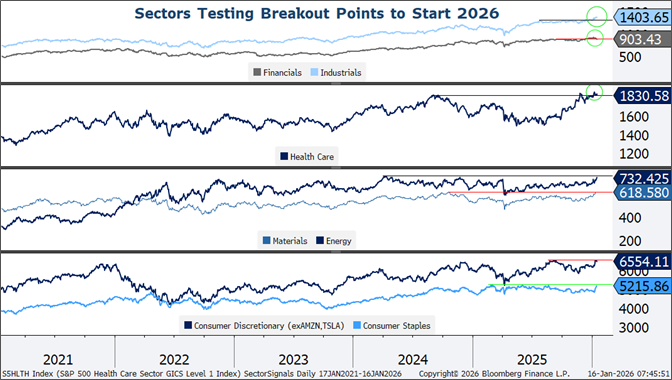
Domestic growth themes based on policy support and regulatory reprieve have largely driven equity market rotation out of tech and toward other sectors in the US equity market in recent months. Renewed geopolitical turmoil and some disappointment on the domestic policy front now threatens to upend the party in 2026. …
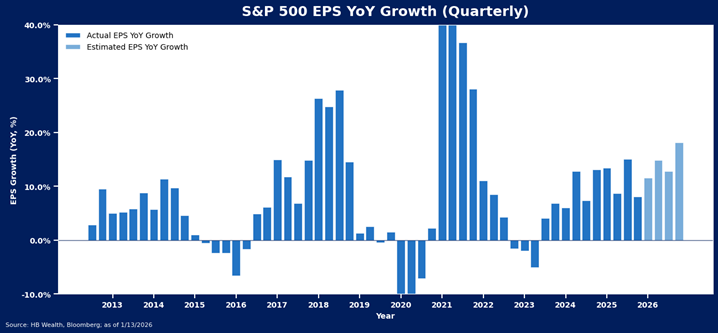
Analyst expectations for about 8% growth in S&P 500 EPS in the fourth quarter earnings season appear likely to be easily beaten, but the forecast for the index to accelerate the pace and end 2026 with nearly 20% EPS growth remains up for debate. Likewise, our macro model suggests the…
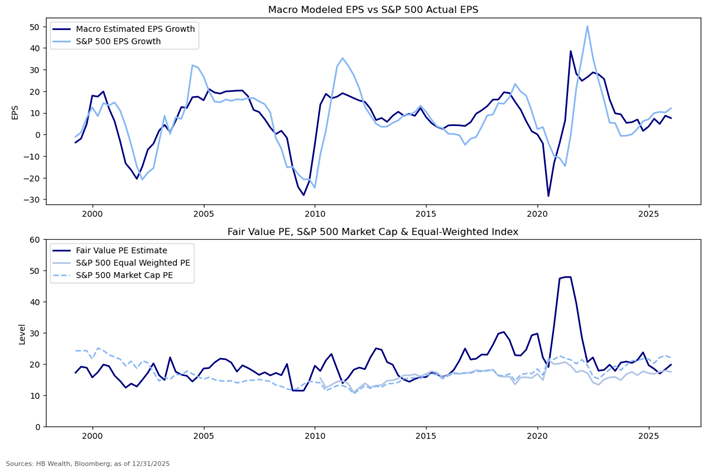
Our macro model for S&P 500 valuations shows multiples have jumped too far ahead of macroeconomic support and this may slow the pace of index price growth in the near term. This model suggested markets were largely undervaluing low interest rates for most of the last two decades, supporting the…
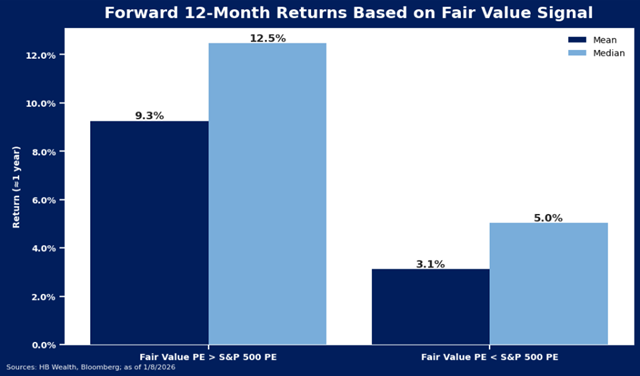
January events could set the tone for stocks in the year ahead, as elevated market multiples imply both the Q4 earnings season and FOMC Meeting are likely to be critical moments that set the stage for equity market direction. Given valuations for the market are well north of levels justified…
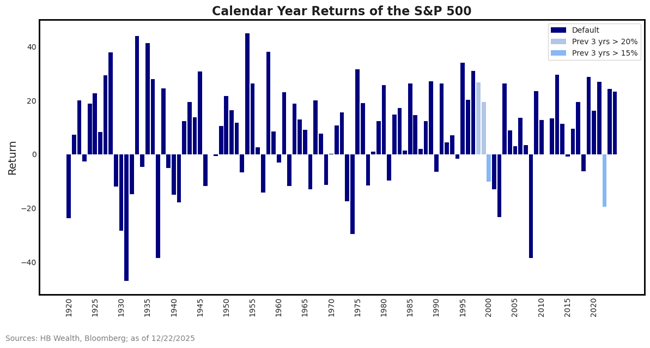
The S&P 500 is on pace for a third consecutive year of more than 15% price growth, and if a Santa Claus rally takes shape in the final trading days of the year, it could hit rare air with a third straight year of 20% growth. There is little historical…
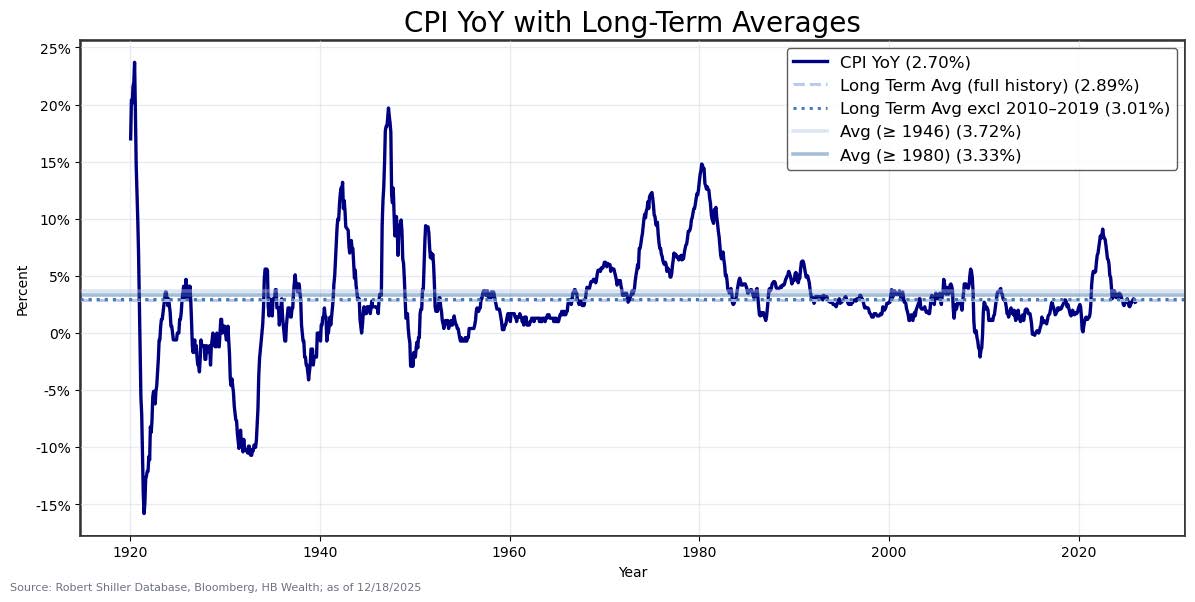
After rising for the bulk of the summer, consumer prices finally eased somewhat this fall, and the consumer price index (CPI) hit its slowest pace of growth since 2021 in November. It is too early to call an “all clear” on inflation risks, as autumn data may be somewhat distorted…
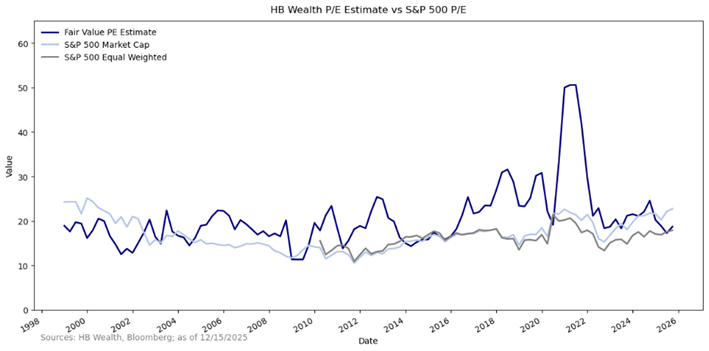
Stocks rallied on welcome news of another round of liquidity provision and brightening growth from the Federal Reserve last week, only to unwind the trade (and then some) in recent days. Our valuations Model suggests the equity market may continue to struggle to see a few more Fed cuts as…
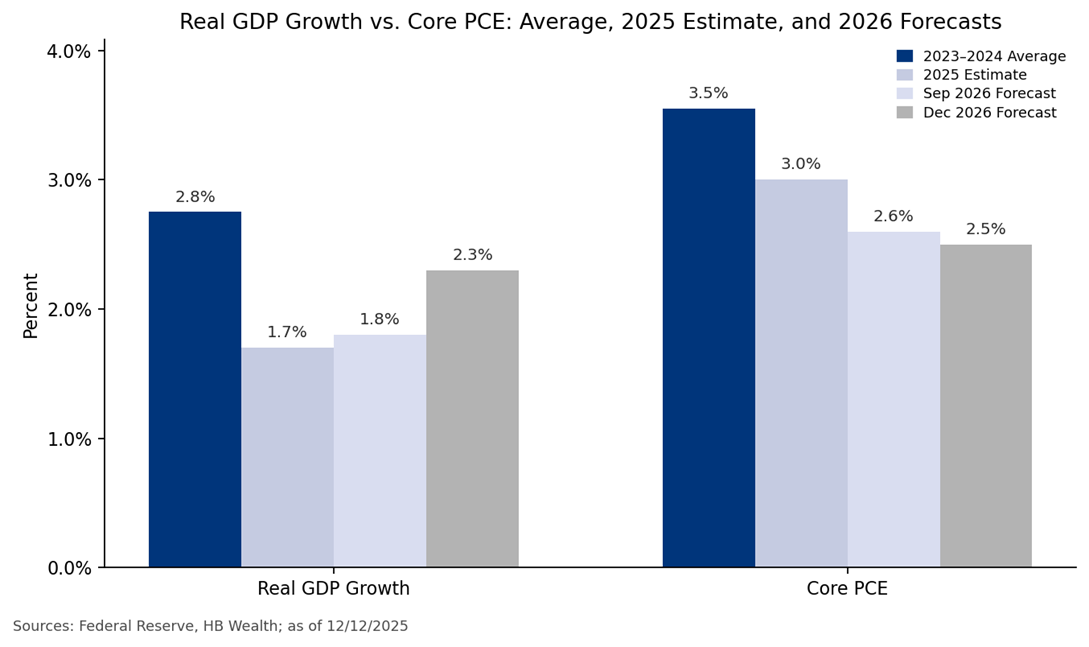
The Federal Reserve meeting this week offered more than just a liquidity cue for markets. It also contained hints that the time for AI to morph from tech profits-driver to broader economic force may be emerging. If growth accelerates while inflation eases, as the Fed now expects, S&P 500 profits…
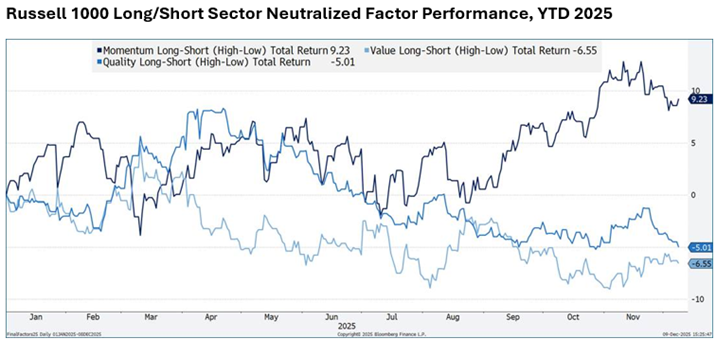
Momentum is the only major factor that is working in the U.S. large cap equity market in 2025, as well as in the bull market that began in 2023. The total return spread between high momentum and low momentum stocks is up 9% so far this year, far outpacing all…
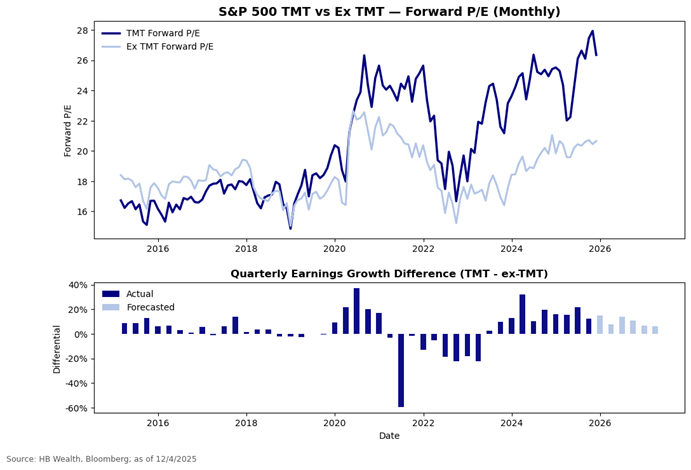
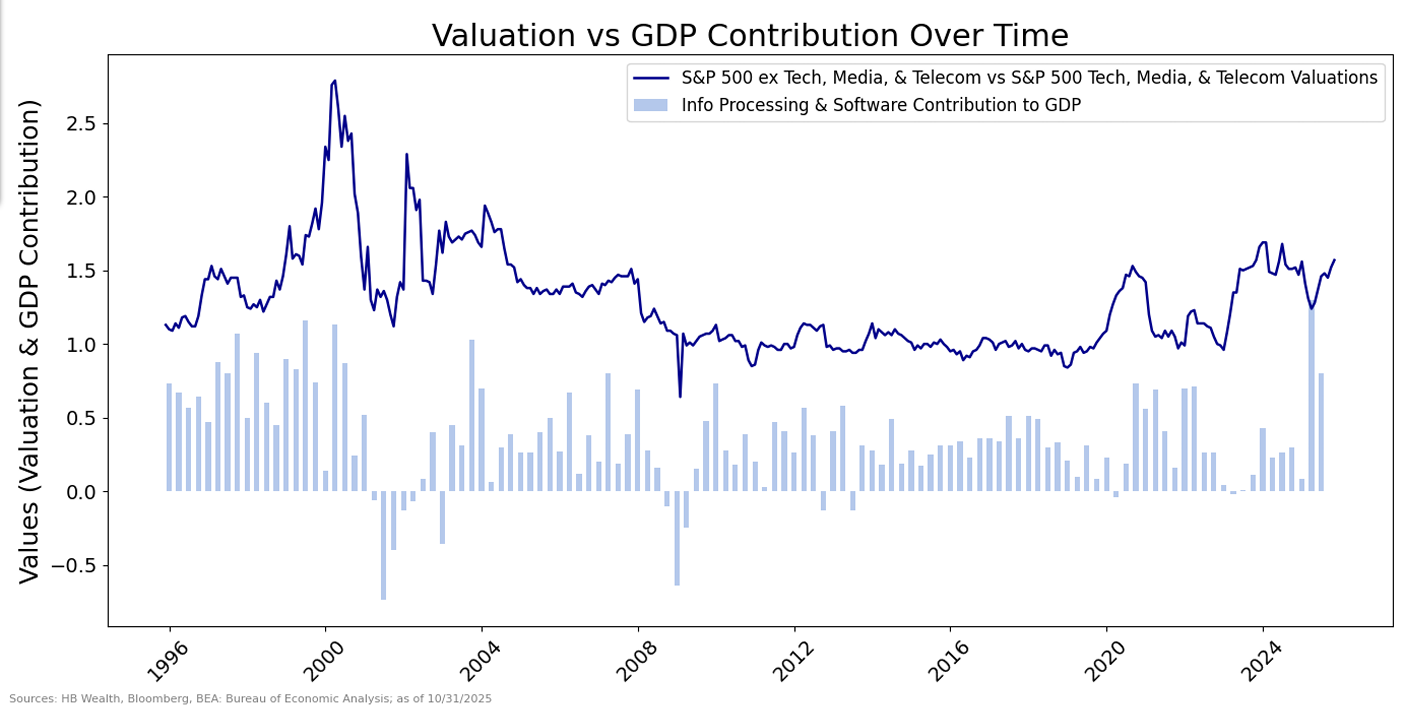
AI stocks’ earnings dominance has resulted in bloated multiples for S&P 500 tech, media and telecom (TMT) stocks, as investment dollars concentrated in the strongest growth opportunities in the index. However, the analyst consensus sees a more normalized environment for earnings emerging with policy support in 2026. This closing of…
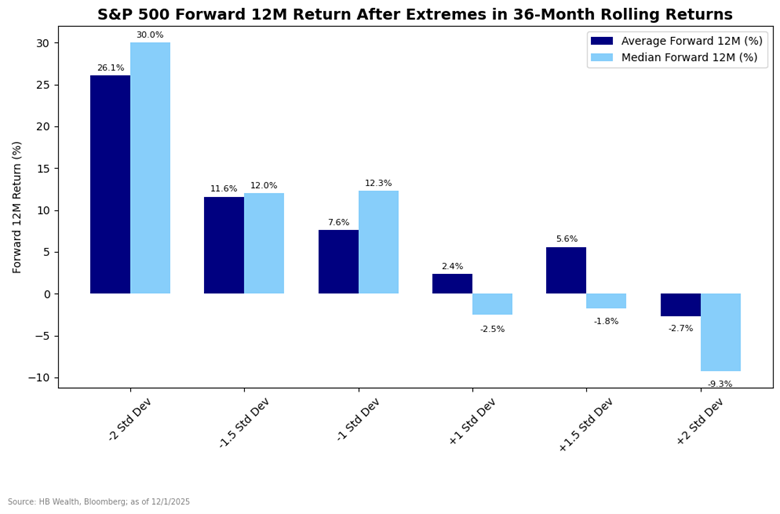
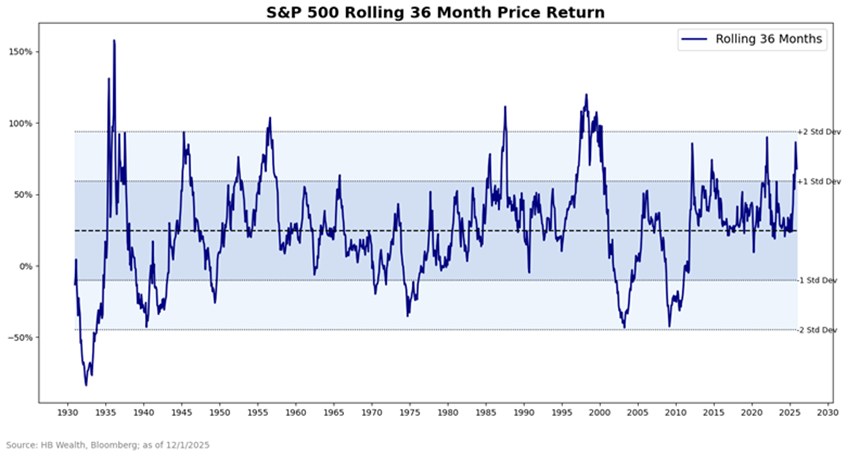
The S&P 500’s 36-Month Rolling Return neared 2 standard deviations from norm in September. The chart below shows what historically happened after extremes were reached in the measure. The more extreme the deviation, the lower the return prospects. Likewise, such extreme deviations above norm generally lower the probability of a…
The annual prognostications for equity market returns are rolling out as the end of the year approaches, and the current strategist consensus suggests a moderate 5% return is likely. Historical patterns support these low expectations, for the S&P 500 has crossed a critical threshold that implies a strong likelihood of…
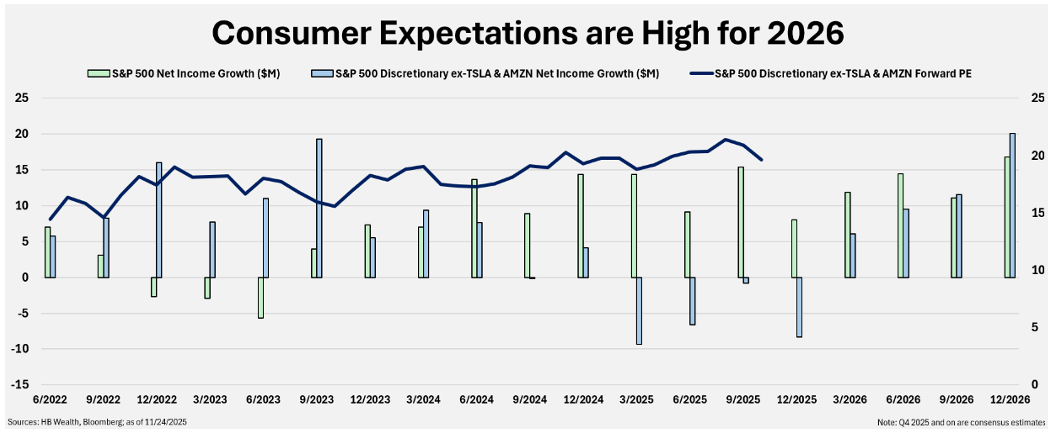
Thanksgiving week normally kicks off a period of positive seasonality in stocks, in part because the U.S. consumer rarely disappoints during the holiday season. But high market expectations for recovery in 2026 may be tough for the consumer to overcome in the year ahead. Consensus and market implied expectations for…
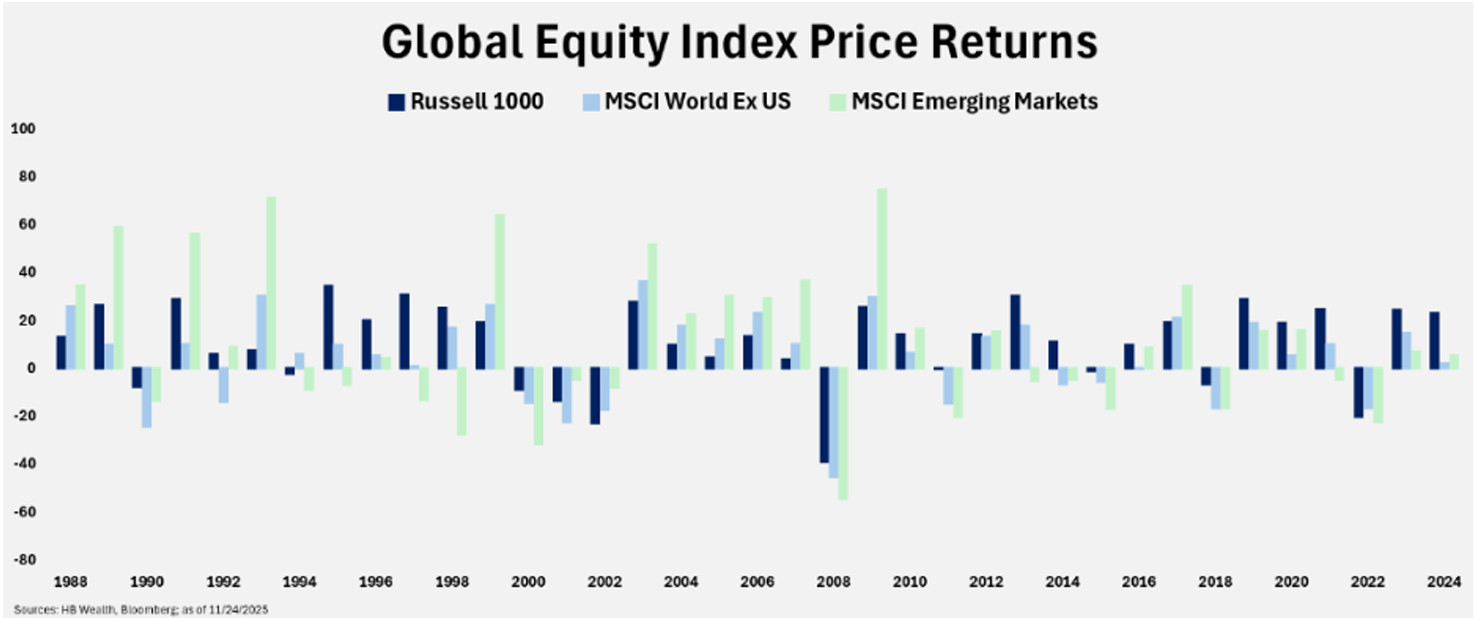
International stocks are on their way to their first year of outperforming domestic stocks since 2017, and strengthening earnings, discounted valuations, and dollar depreciation may all continue to make the case for global shares to perform well into 2026. U.S. stocks (represented by the Russell 1000) are up 13% so…
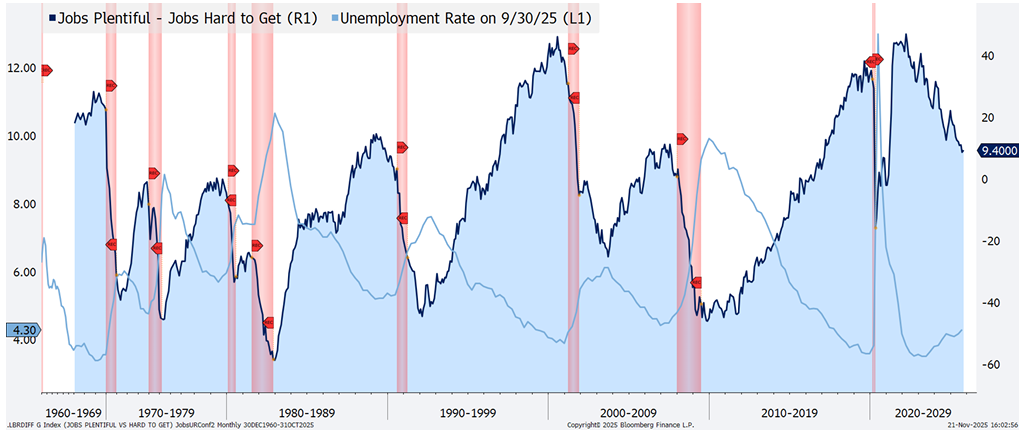
The jobs market has signaled a weak economy for years, even as other indicators such as corporate profits suggest the economy is holding up reasonably well. This may help explain why consumer confidence remains near record low levels, even as the stock market is at record highs. The unemployment rate…
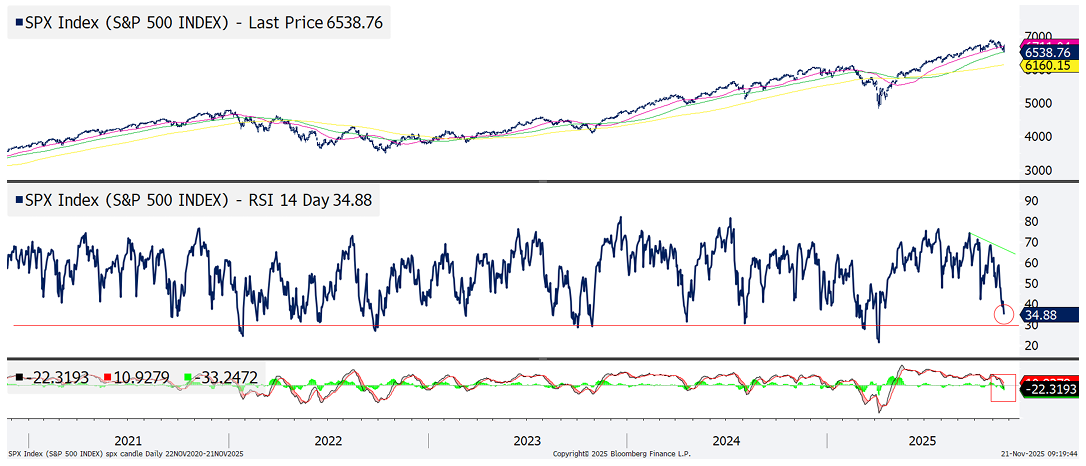
The longer-term equity bull market remains intact, supported by S&P 500 moving averages that are still trending higher, but stocks’ short term sell-off looks likely to deepen nonetheless. Momentum, represented by 14-day RSI, is not yet oversold and MACD (moving average convergence divergence) has just crossed into negative territory, hinting…
The equity market is enthusiastic about prospects for AI spending to remain a primary driver of earnings growth, and while a cooldown in valuations may be needed to keep expectations from getting too far detached from reality, both investment trends and stock multiples are less extreme than they were in…
- « Previous
- 1
- 2
- 3
- 4
- Next »