








Equity Research
By:





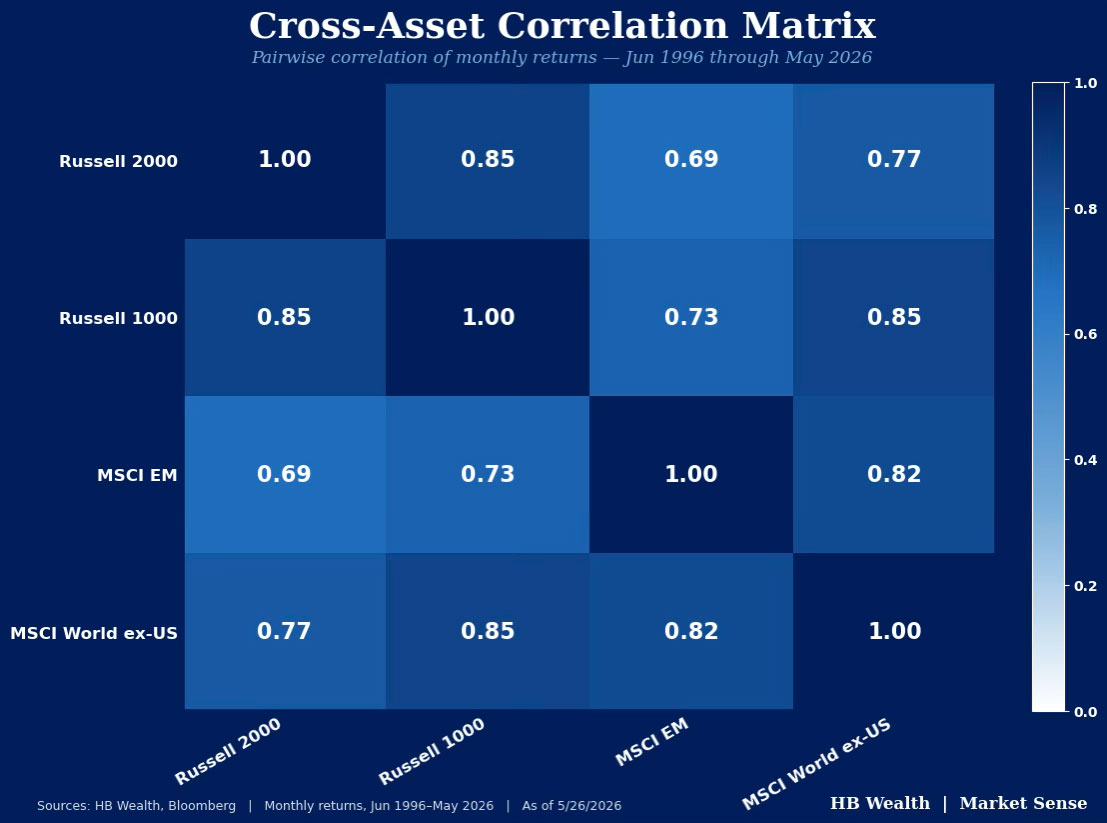
Abstract: Adding nondomestic stocks to an equity portfolio has clear diversification benefits, and both emerging and developed markets stocks are discounted to domestic peers. Strong earnings forecasts for the former hint the gap in multiples could close if consensus is correct, while resolution of turmoil in the Middle East may…
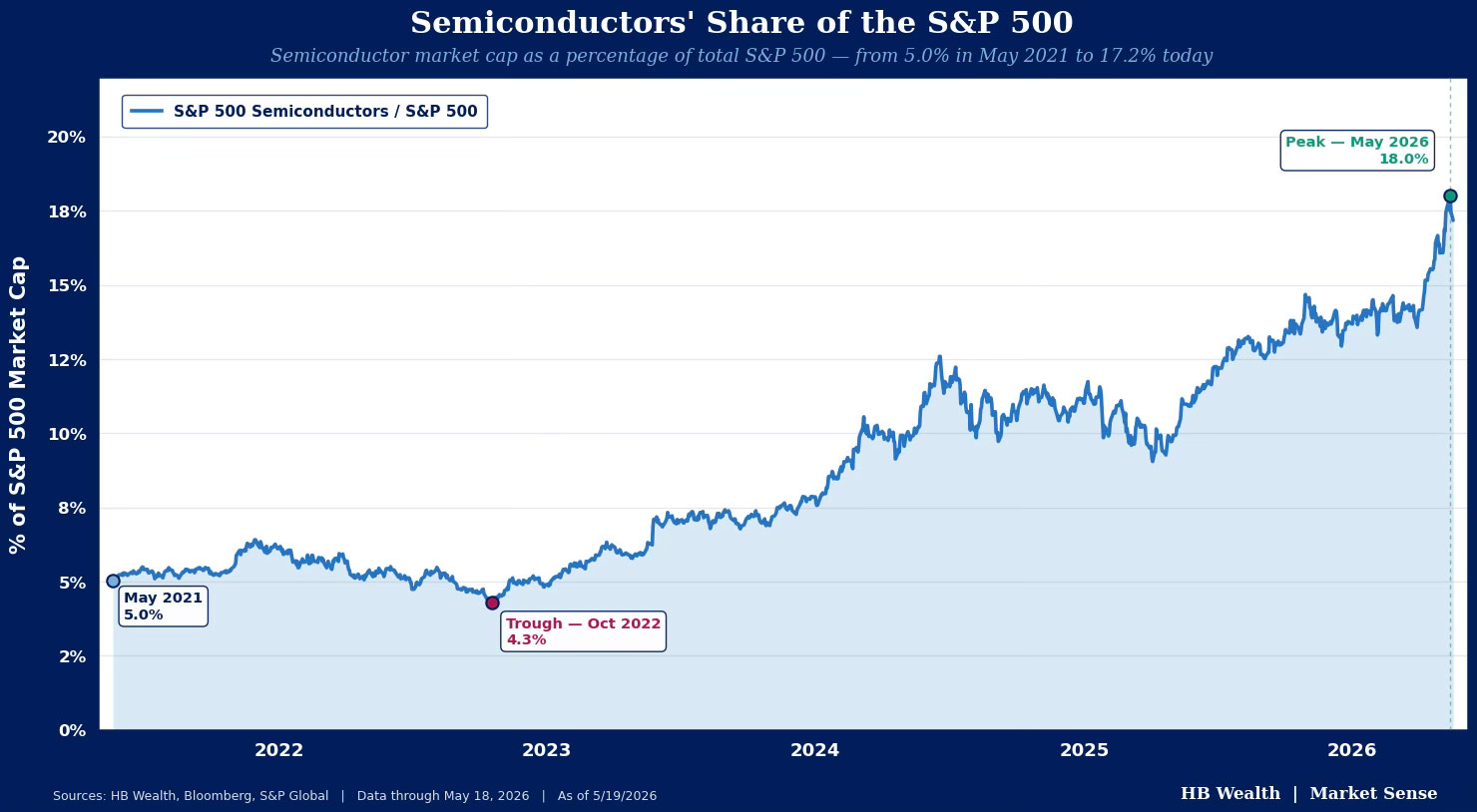
Abstract: One of the largest, risk-tolerance-setting industries in the S&P 500 – semiconductors – has jumped more than 50% from March low to last week’s high as earnings continue to blow past consensus. Technicals may already be in the process of correcting but remain only part of the concern. Valuations…
Abstract: AI Disruption Has Growth Leading Quality, but It is Likely Short Term Though tech and fast-growing stocks have blurred the lines between quality and growth factors, the two show different performance over time – most especially during downdrafts. Growth factors usually comprise some form of fundamentals, measuring EPS or…

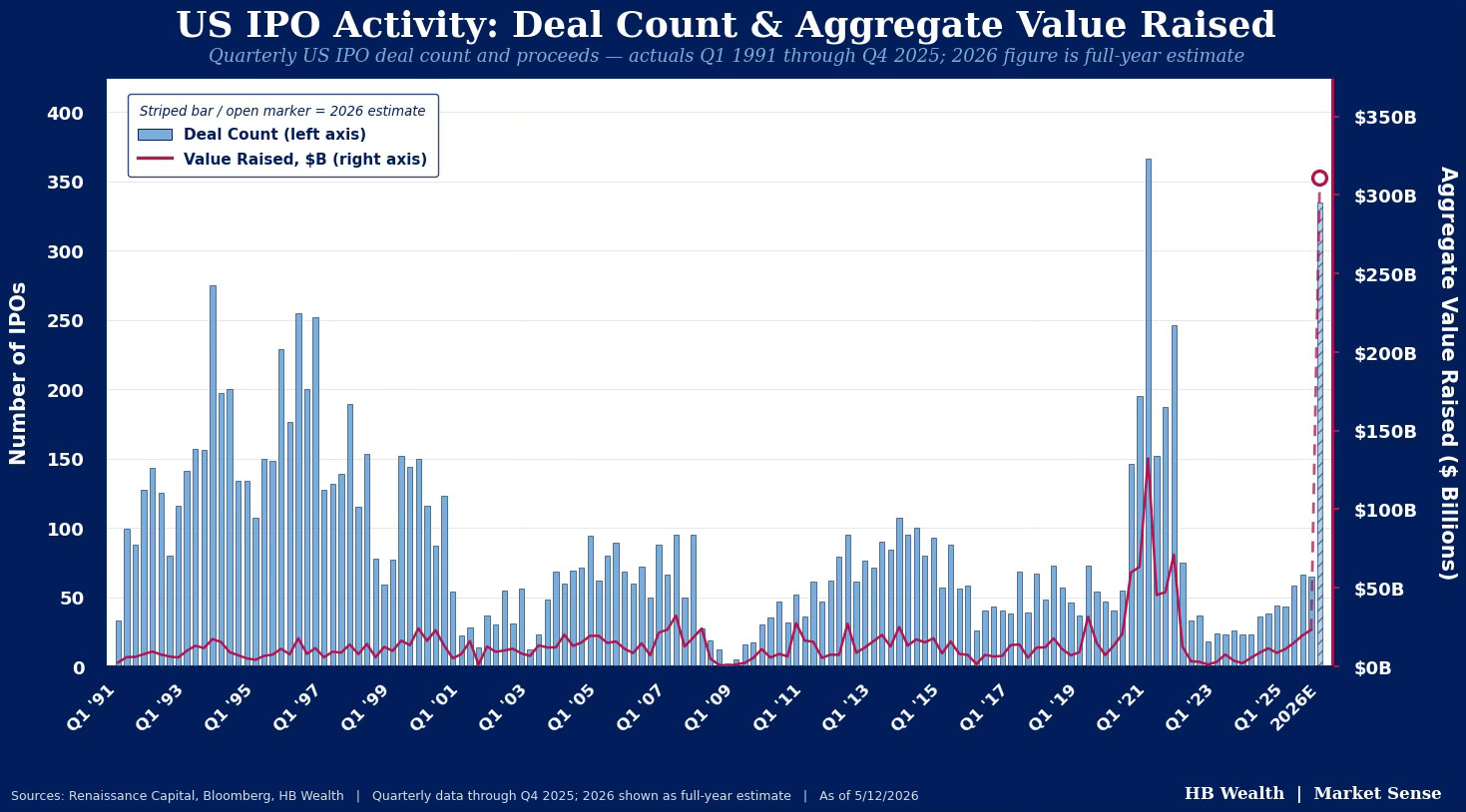
Abstract:2026 could be the best year for IPOs on record based on already completed deals and the expected size of SpaceX, OpenAI and Anthropic offerings. Due to its low float shares outstanding, SpaceX’s effect on the S&P 500 could be limited to start. If OpenAI and Anthropic follow a similar…
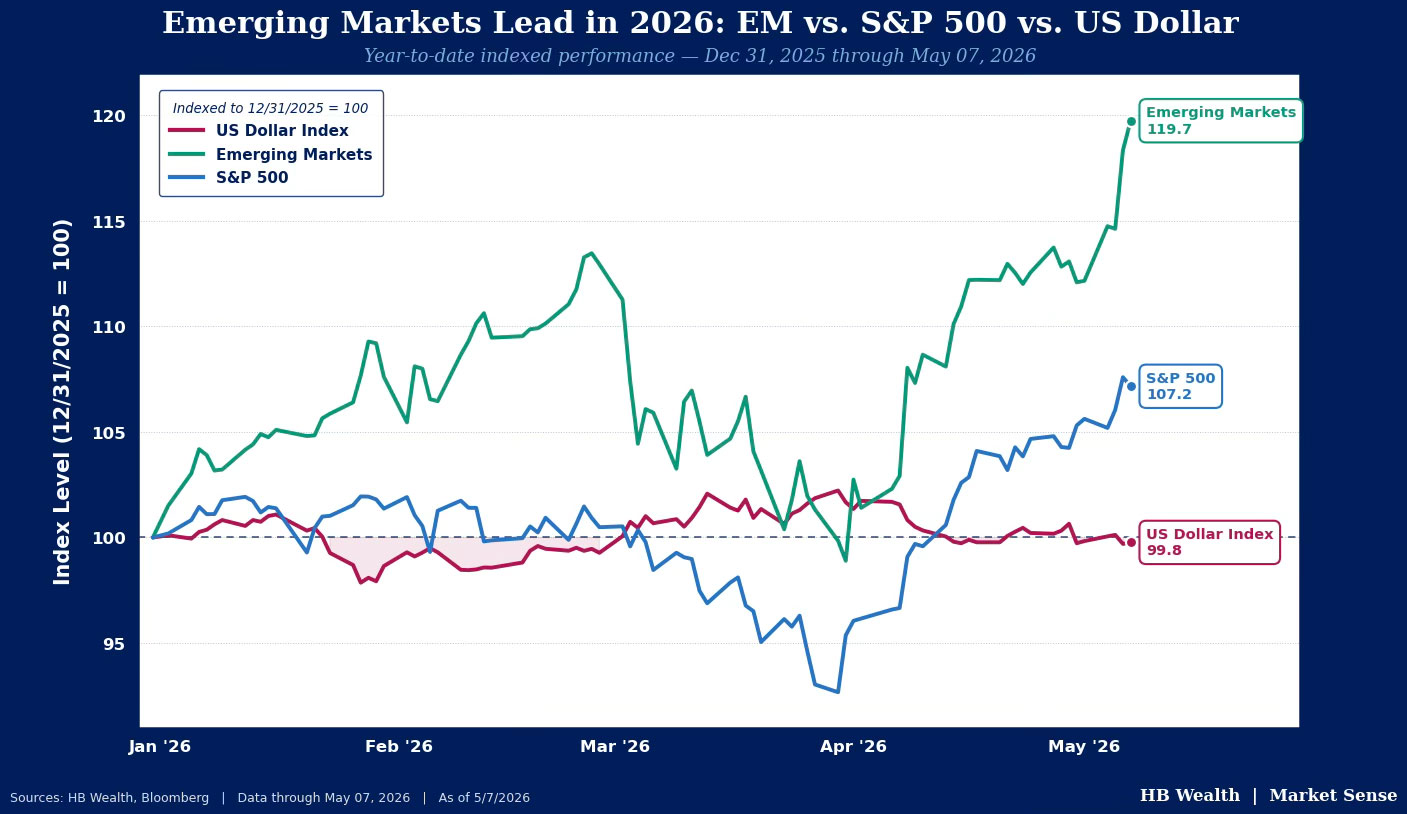
Emerging Market equities are on pace for a second consecutive year of outperforming U.S. stocks, the first back-to-back annual outperformance since 2010. So far this year, the group has outperformed U.S. large caps by more than 2X, up nearly 20% versus the S&P 500’s gain of 7%. Notably, emerging…
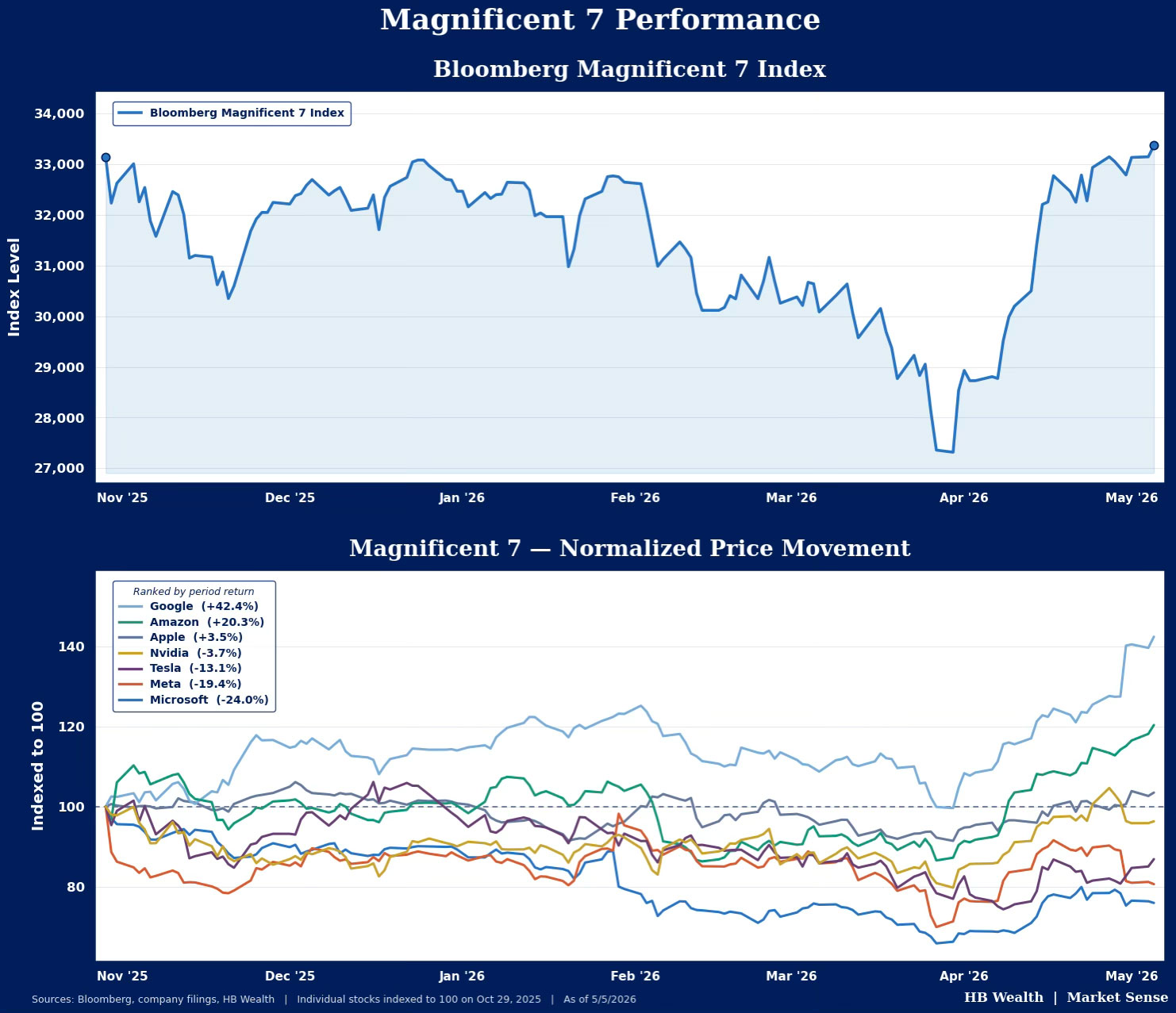
Abstract:The Magnificent Seven has managed to recover its year-to-date loss with April’s rally, though most stock prices in the group remain below former peaks as the market continues to work through likely outcomes of the group’s tremendous investment in AI. Pairwise correlations are likewise dropping, demonstrating the breakup of the…
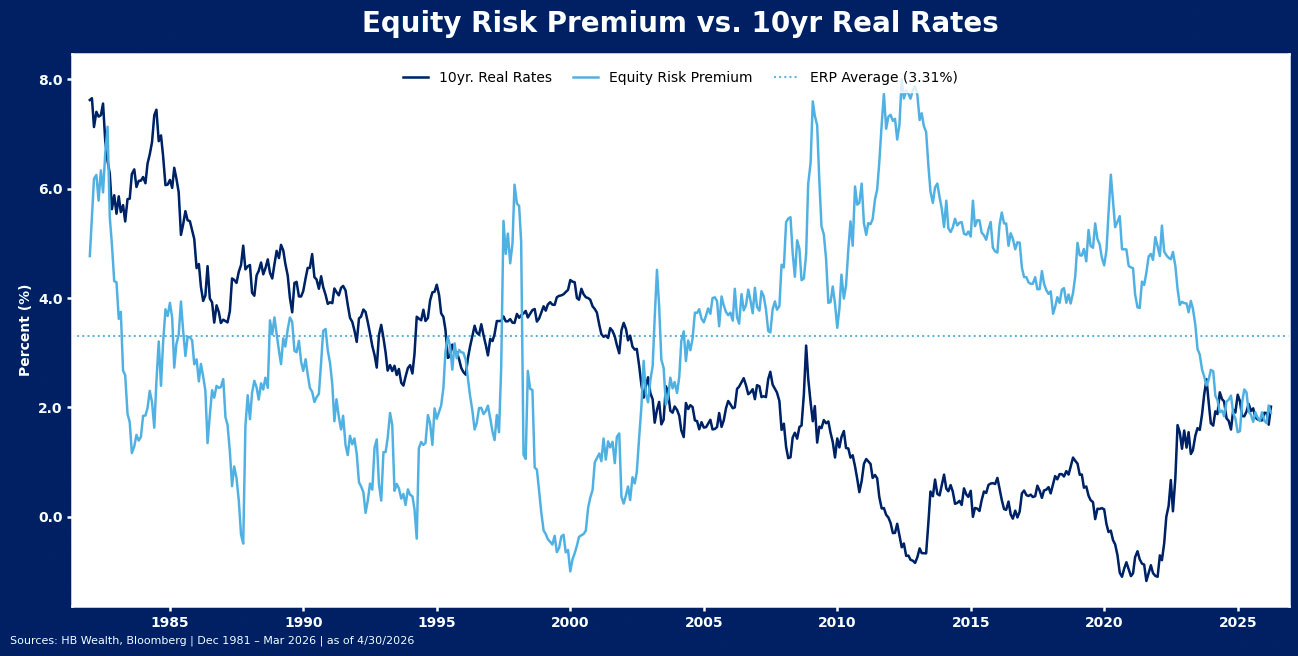
Abstract: Equity Risk Premium’s Normalization More About Real Rates Than Expensive Stocks The equity risk premium (ERP) – commonly defined as the difference between the earnings yield on stocks and 10-year real interest rate – suggests that stocks are the most expensive they’ve been since well before the Great Financial…
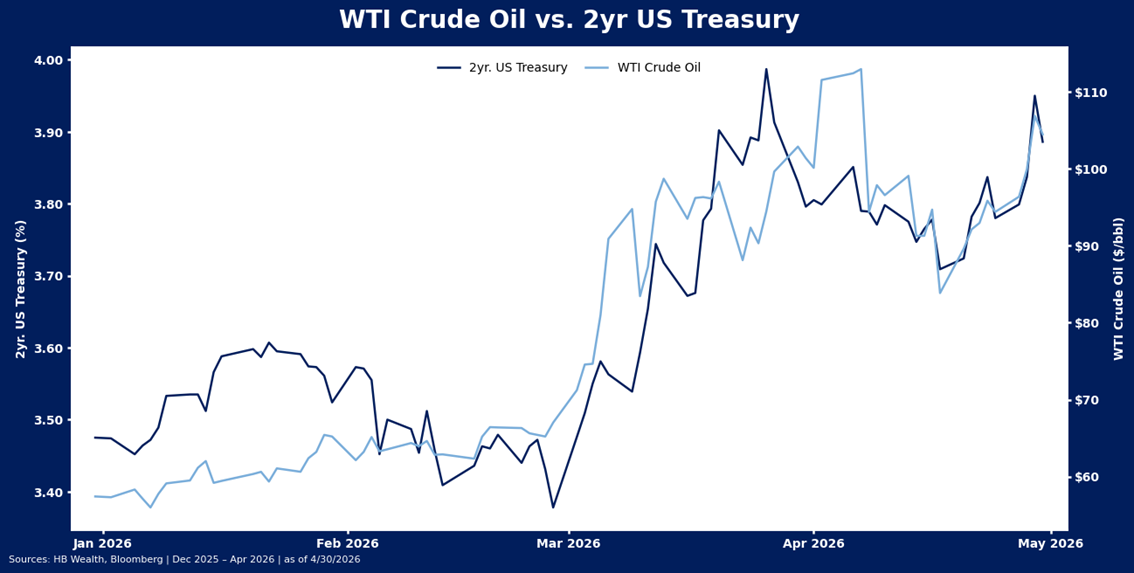
A notable divergence emerged between equities and bonds in April, with 2-year Treasury yields tracking oil prices closely, and equities largely shrugging off the risks that have emerged with ongoing turmoil in the Middle East. The 2-year Treasury yield is back to 3.89%, its highest level since late March, moving…
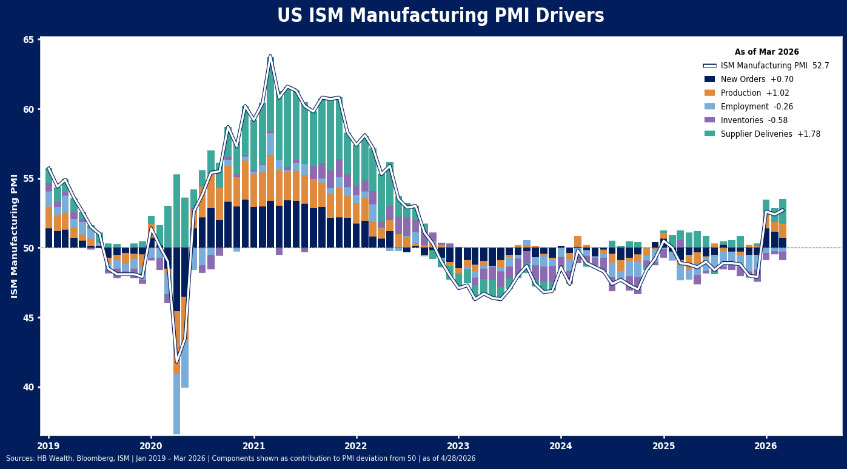
Abstract: After a Three-Year Recession, Manufacturing Might Be Turning the Corner The manufacturing economy may be turning a corner for the first time in three years, and this could support new leadership in US stocks. Measures of manufacturing activity have hinted at a recession-like experience for the last several years,…
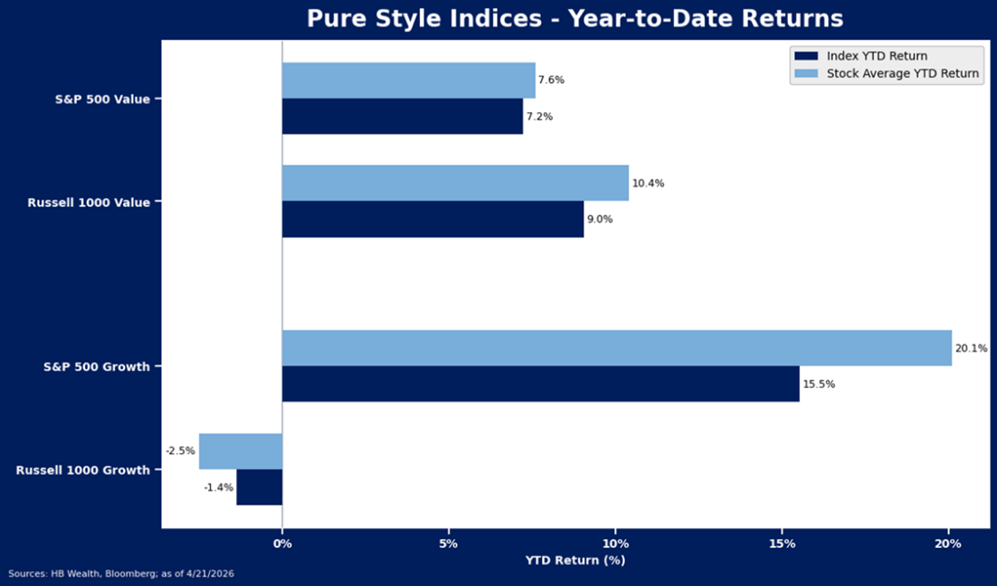
Abstract: Value Has Supports that Growth Lacks The largest of large cap growth stocks have roared back from late-March lows as investors have gravitated back to perennial favorites on the presumption that recovery from war-time strain may prove similar to recovery from tariff-policy stress. However, there is an underlying weakness…
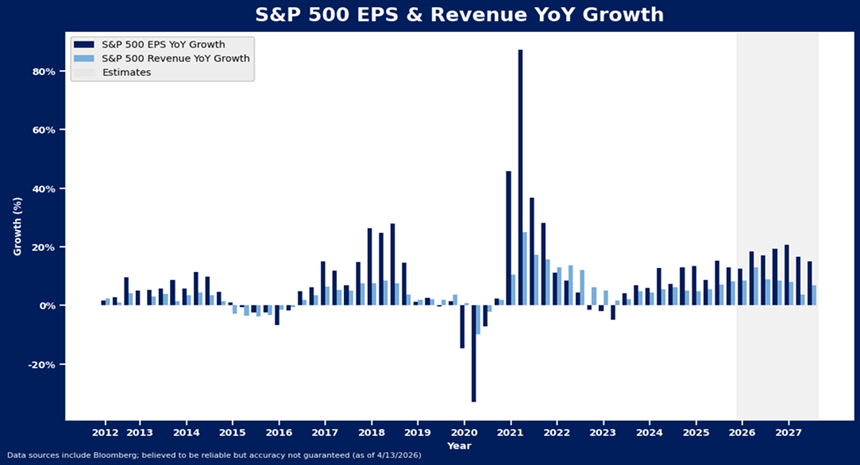
Earnings season is helping to boost the mood for equity markets. Despite souring economic data at the tail end of Q1, the S&P 500 is on track to record about 12.4% YoY EPS growth for the quarter. This is in line with the pre-season expectation, and a modest slowdown from…
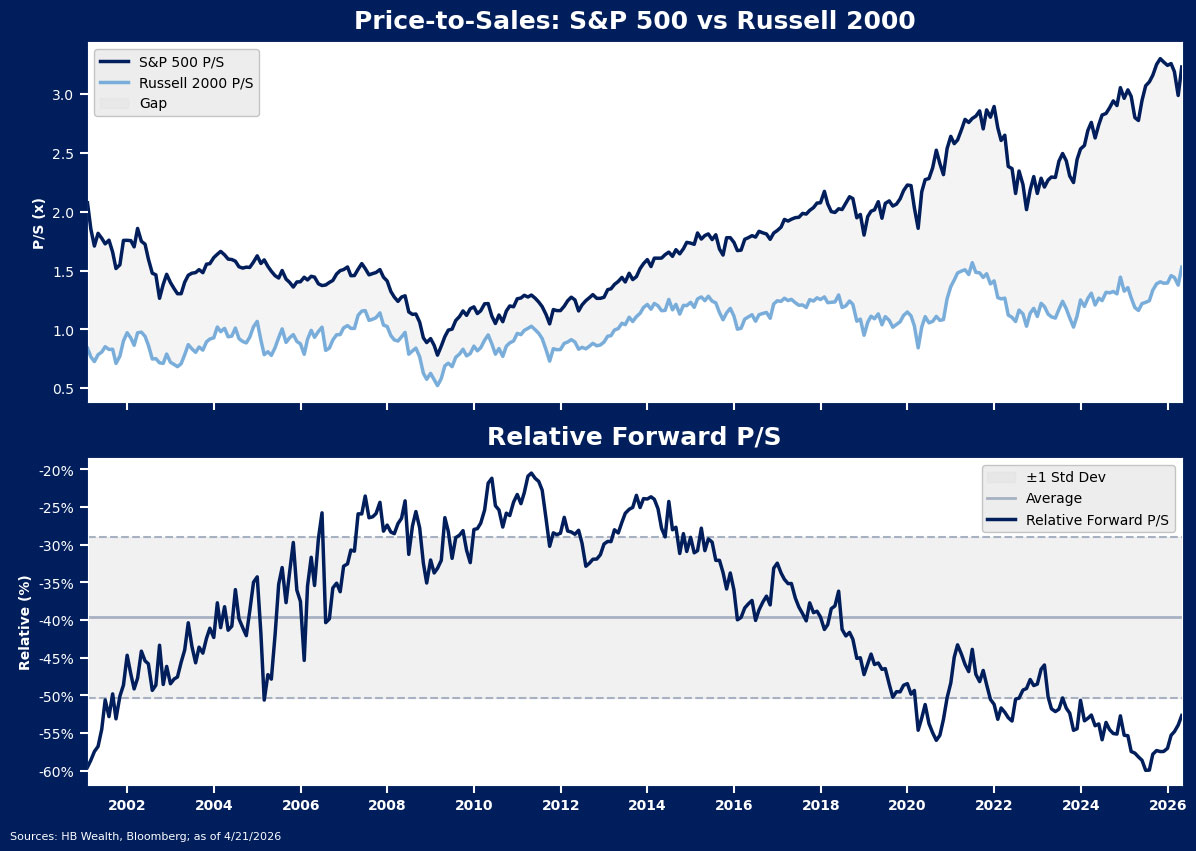
Abstract: Russell 2000 Is Getting Sparks from Revenues, Macro and M&A Small cap stocks have long been discounted to the S&P 500 as mega-cap dominance now extends back nearly a decade. However, in 2026, the Russell 2000 is finally getting the sparks it needs for a period of outperformance –…
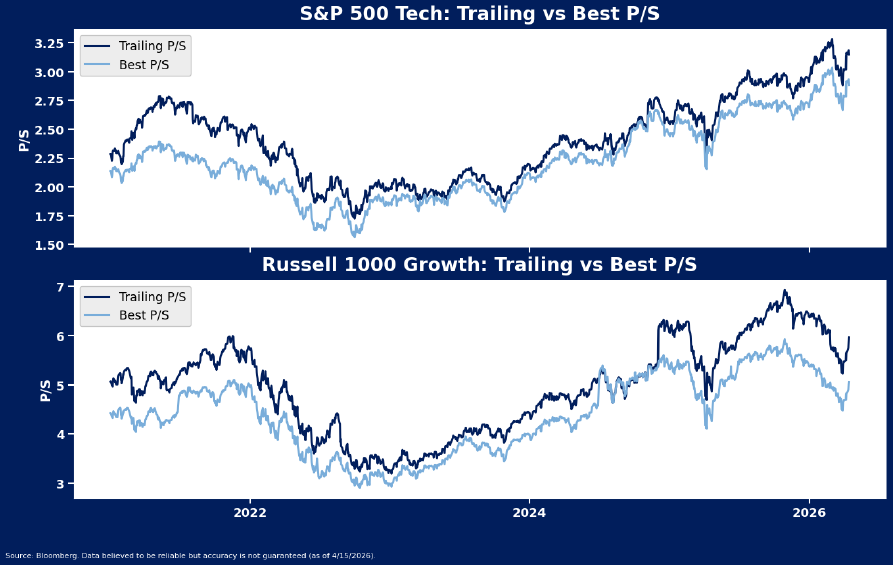
Abstract: Discounted forward valuations are giving some investors the impression that the tech sector is much cheaper than reality. While it’s the one undoubtedly cheap segment in tech, software terminal value risks from AI make risk taking difficult in aggregate even if company opportunities exist. Meanwhile, the highest multiple stocks…
Abstract: S&P 500 earnings face high hurdles this earnings season but given the ongoing conflict in Iran and the drastic effects that AI-spending could have on free cash flow, success in 1Q will be much more about guidance and the forward outlook than clearing consensus expectations. Operating margins and their…
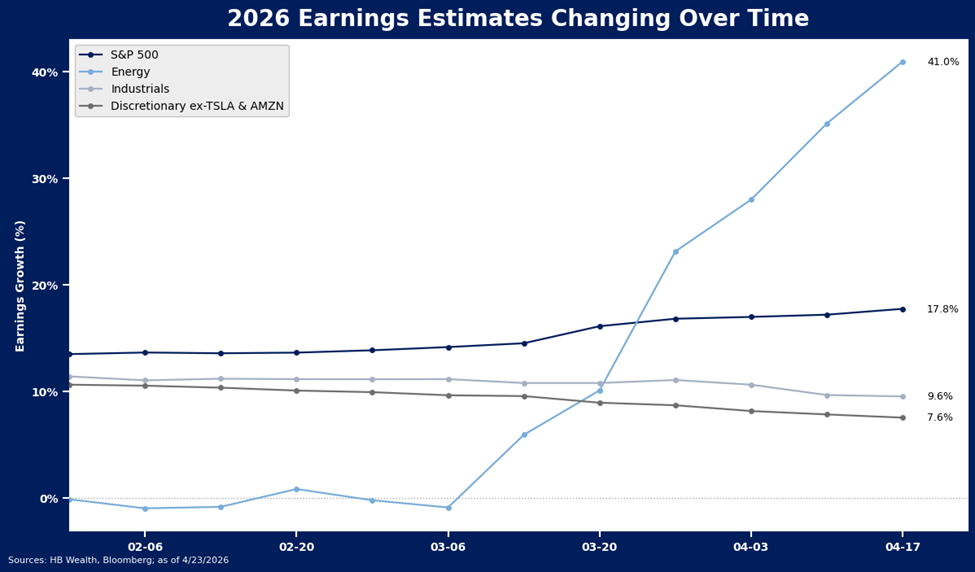
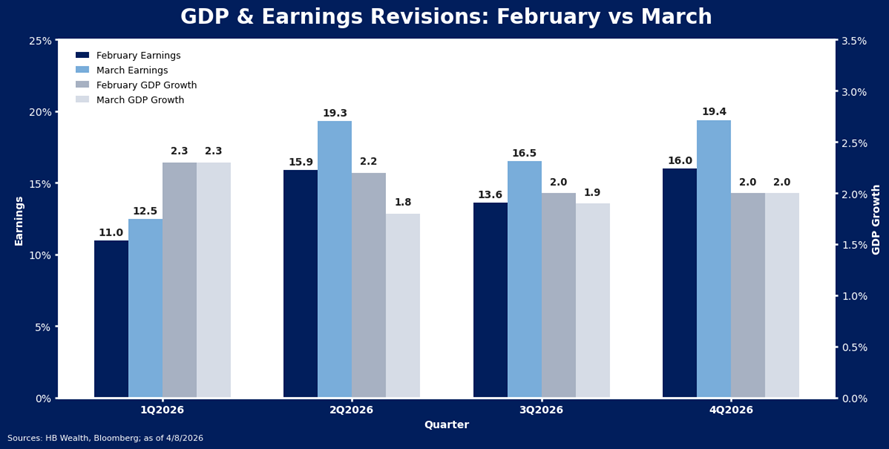
While strains from the conflict in Iran are already apparent in economists’ GDP forecasts, S&P 500 earnings estimates have hardly budged. The rub: GDP is heavily tilted towards consumption, increasingly at risk thanks to elevated oil prices, while earnings instead follow business investment. Thus, bottom-lines are likely to be revised…
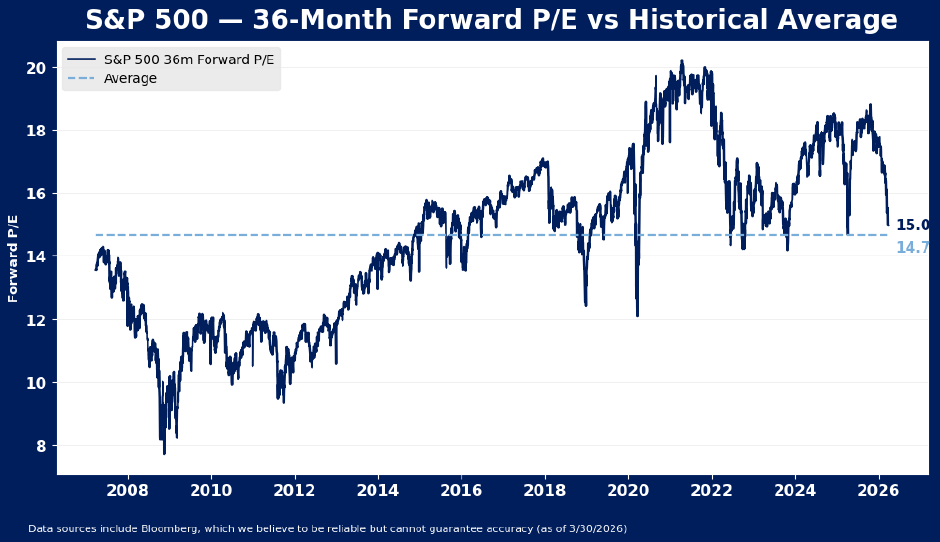
U.S. equity market valuations are starting to reflect inevitable inflation and growth risks of war in the Middle East, and while this may be enough to catalyze opportunistic dip-buying on a selective basis, optimistic analyst sentiment may continue to impede the formation of a more durable advance. Contrary to the…
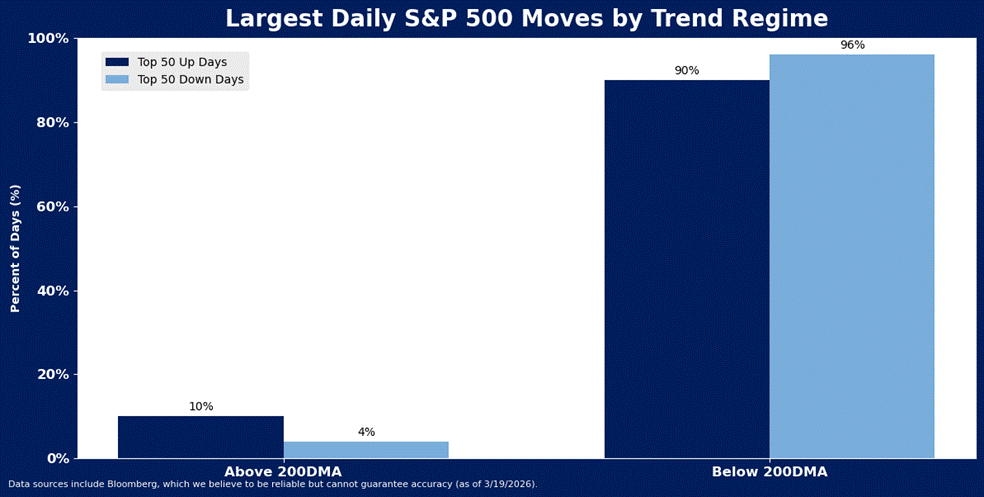
Stocks’ technicals continue to weaken, and for the first time in the post-Liberation Day bull market, U.S. large cap stocks are testing their 200-day moving average. In the words of Paul Tudor Jones, “Nothing good happens below the 200-day moving average.” While indeed, a close beneath this level increases the…
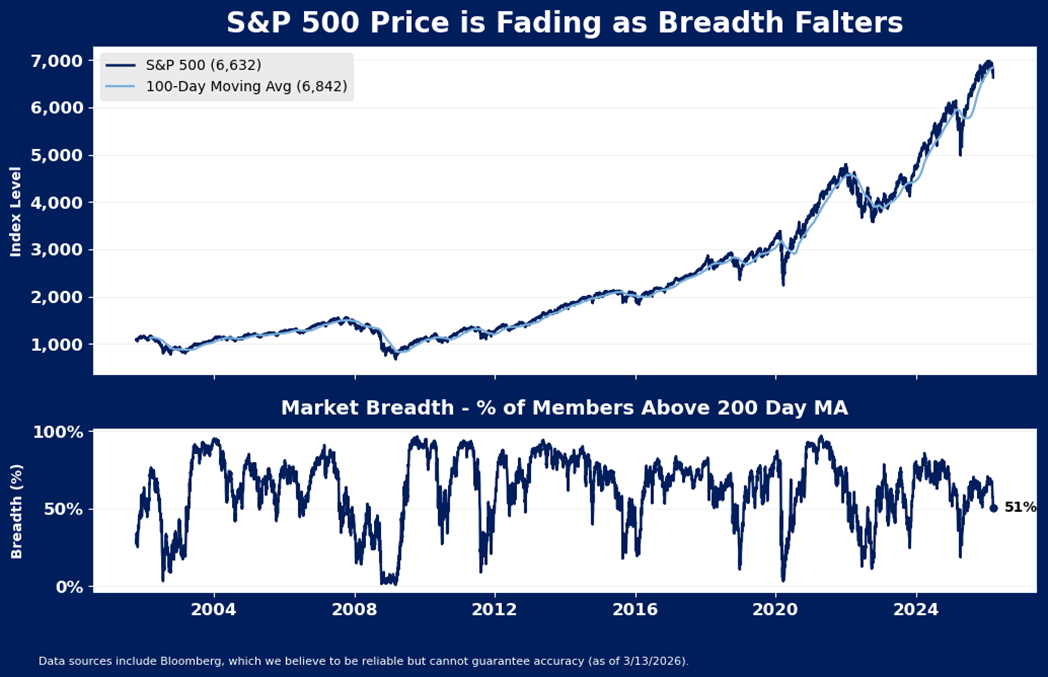
Though the headline decline in the S&P 500 of 3% over the last two weeks may at first appear benign, underlying supports for the index are fading fast, as war in the Middle East has depleted breadth at the stock and sector levels. While most investors are watching the price…
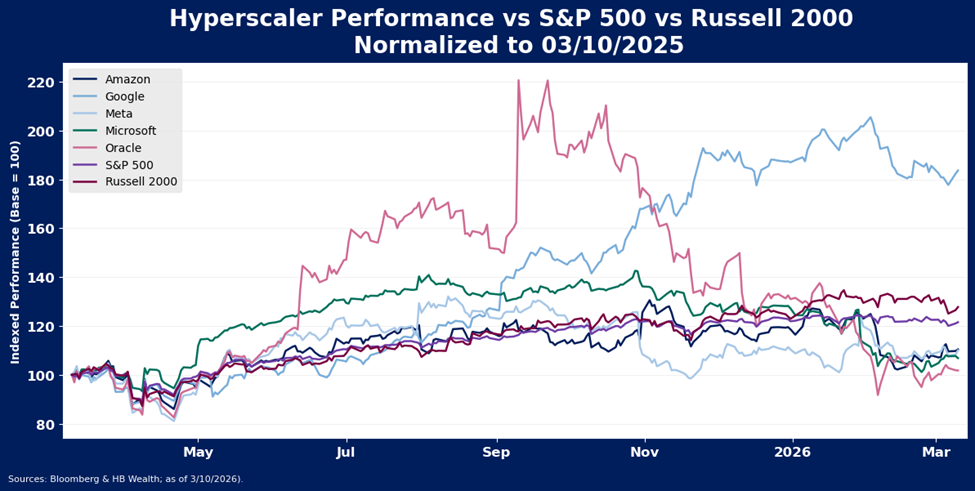
U.S. stocks remain off their highs and despite some relative performance improvement since the war in the Middle East broke out, have underperformed international stocks on a trailing 1-year and year to date basis. Stocks of the five hyperscalers are down 9.3% as a group in 2026, and only Alphabet…
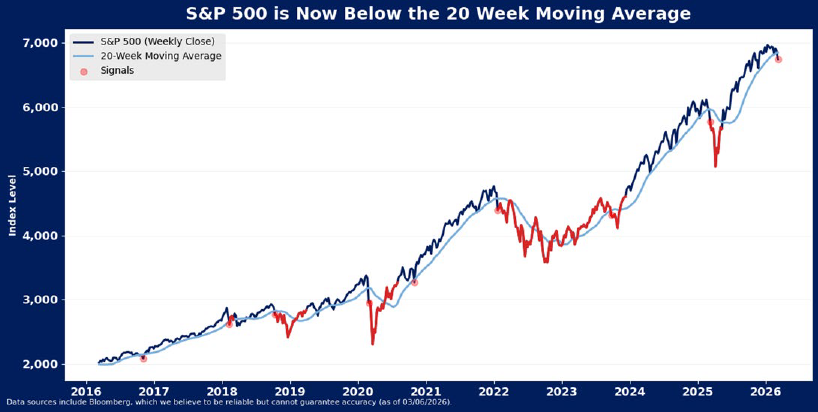
The S&P 500 has broken through key support at its 100-day and 20-week moving average for the first time in about a year, increasing the probability of a full correction in the index in coming weeks. There have been just 8 other instances when the market has broken down as…
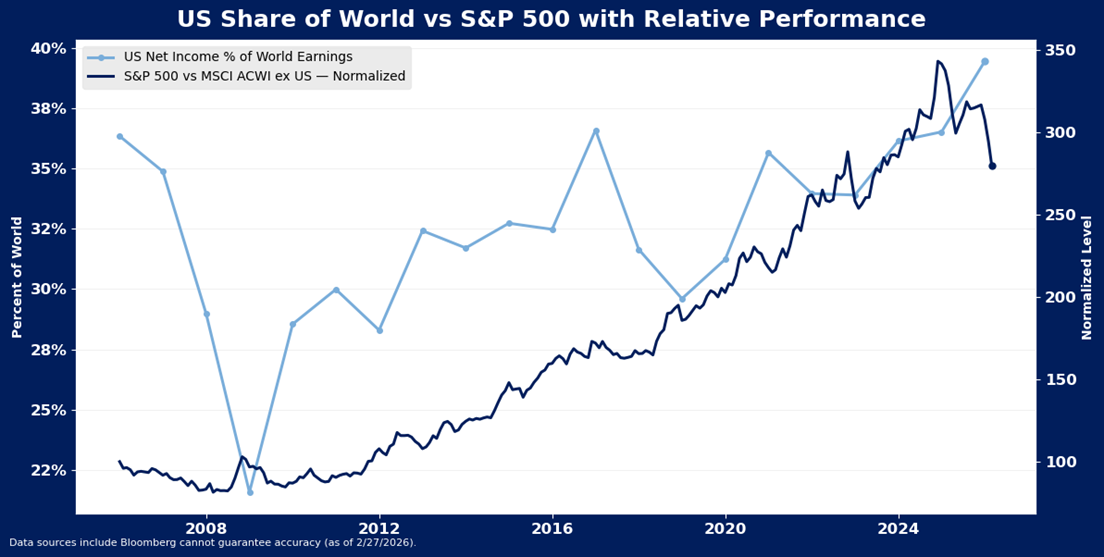
So far this year, 18 of the 19 largest country markets in the world are outperforming the US equity market. This vast outperformance is better than any start to the year since 2005, when all 19 markets outperformed the US. Yet, a persistent valuation gap between the US and the…
- « Previous
- 1
- 2
- 3
- 4
- Next »