






Looking Back to Inflation Lessons from the 1970s

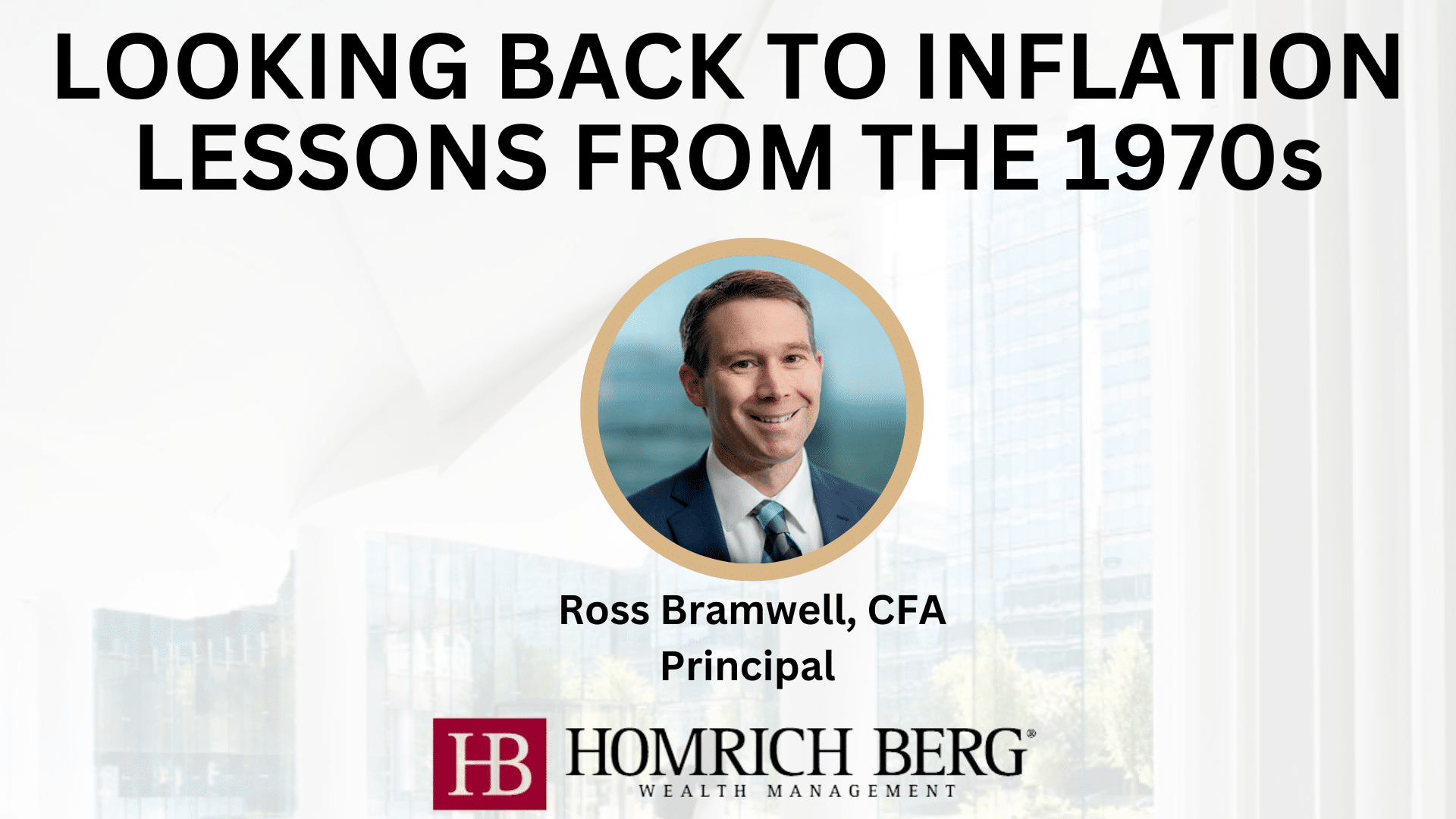
Image displaying the title Looking Back to Inflation Lessons from the 1970s with a circular photo of a smiling man labeled as Ross Bramwell, CFA, Principal. The background features the Homrich Berg Wealth Management logo.

Two large U.S. bank failures and the takeover of another large global bank weakened confidence in the global banking system, but central banks and governments stepped in to bolster confidence. As soon as these events occurred, many believed the Fed would have to stop raising rates and would pivot to support the economy. However, the Fed proceeded with another rate hike last week as it firmly believes its top priority is to bring inflation down. Fed Chairman Powell has often referred to the policy actions of the 1970s during his press conferences. In this short video, we look back at the 1970s for a little bit of a history lesson as to why the Fed may likely stay aggressive in its current fight against inflation even as economic risks rise.

If you have further questions about the video, please reach out to a member of your service team or contact Homrich Berg at 404.264.1400.

Watch here: https://youtu.be/tYXFQPpZoh8?si=18rlueZbt6aDhfMa

A man in a blue suit and checkered tie smiles at the camera. The background is blurry, showing a window with an abstract view of a cityscape.

Ross Bramwell, CFA

Managing Director of Investment Communications, Shareholder

Ross joined HB Wealth in 2013. He has over 20 years of experience across the accounting, financial services, and investment industries. He currently serves as a member of the HB Investment Committee. He previously managed the firm’s real estate platform. In his current role, Ross takes the lead on client communications, investment messaging, and presentations that focus the firm’s perspective and outlook on the economy and markets. He often participates in client meetings to discuss investment allocations, the economy and markets, and private alternatives.

Related Insights & News

White text reading HB Wealth on a solid dark blue background.

Homrich Berg Unveils HB Wealth as New Name, Aligning Under Unified Brand

$25B RIA’s rebranding reflects national scale and client-centered focus ATLANTA, GA — August 19, 2025…

Read More

Text graphic with four black brushstroke squares, each containing different business types: Sole Proprietorships, Partnerships, LLC, and Corporations.

Evaluating Business Structures: The Pros And Cons

Family businesses often start small with simple business and tax structures. However, as businesses expand,…

Read More

Image featuring a financial theme. Text reads, Interest rates are still a key driver of stock market returns. Includes a circular photo of a smiling man labeled Ross Bramwell, CFA, Principal above the Homrich Berg Wealth Management logo.

Interest Rates Are Still a Key Driver Of Stock Market Returns

The Federal Reserve once again kept its key rate unchanged at its June 12th meeting….

Read More

A field of white daisies against a blue sky, with a hiker in the background holding trekking poles, blurred by depth of field.

Spring Towards Your Financial Goals

Spring is my favorite time of the year. The gloom and cold of winter rains…

Read More

The above is not a recommendation to purchase or sell a particular security and is not legal, investment or tax advice. Results are not guaranteed. All investing involves risk.

Past performance is not a guarantee of future results for any investment. Private alternative investments are not for every client. An individual must be qualified to invest in a private investment based on their net worth and/or other criteria, and they may qualify to invest in some alternative investments while not being allowed to invest in other alternative investments. Alternative investments are not risk-free and there is no guarantee of achieving attractive performance compared to similar liquid investments. Risks associated with investments in private alternatives include the illiquid nature of such investments, risks associated with leveraged investments, manager-specific risks, sector-specific risks, and in certain cases geographical risk, as well as the risk of loss of principal.