








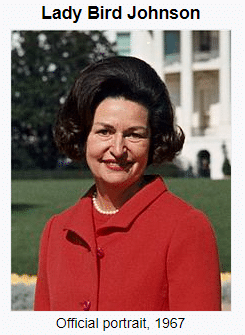
President Lyndon B. Johnson (“LBJ”) was said to have left his home to his wife, “Lady Bird” Johnson, using a deed that granted the property to her immediately upon his death. LBJ likely understood that probate – the legal process of validating a will, appointing an executor, and distributing one’s estate – may sometimes be cumbersome, and he wanted to do his best to avoid the court process and streamline the transition of his home to his wife following his death. As of July 1, Georgia’s new law permitting this type of real estate transfer via “Lady Bird Deed,” took effect[1].
A Lady Bird Deed (also known as a transfer-on-death or enhanced life estate deed) seeks to transfer ownership of the real property to the individual(s) designated by the owner (the “remainder beneficiaries”) upon the owner’s death. As long as the owner is alive, he or she retains total control over the property and may sell it, mortgage the property, or even revise the deed to change or eliminate the remainder beneficiaries. Once the owner dies, the property may pass outside of probate, directly to the remainder beneficiaries named on the deed.
To create a transfer-on-death-deed, the owner(s) must sign a deed designating remainder beneficiaries to receive the property upon the owner’s death[2]. This deed must be recorded with the Superior Court in the county where the property is located. The remainder beneficiaries do not need to sign anything, as their interest in the property will not actually exist until after the property owner’s death.
To revoke a transfer-on-death deed, no notification of the remainder beneficiaries is required. An owner may simply sign a new deed revoking the initial beneficiary designation and designating different remainder beneficiaries or may sign and record an instrument with the Superior Court of the county where the property is located revoking the beneficiary designation[3].
Just as a provision in your last will and testament will not revoke a transfer-on-death designation on an account, it will not supersede the beneficiary designation on a Lady Bird deed; the terms of the deed shall control who should receive the property upon the owner’s death. There are, however, specific actions that must be taken by the remainder beneficiaries upon a property owner’s death to claim rightful title to the property:
(1) sign an affidavit affirming the death of the property owner, including a legal description of the property, and describing whether the beneficiary was the spouse of said property owner; and
(2) file the affidavit and a death certificate with the Superior court of the county where the property is located within nine months of the owner’s death.
Failing to follow this protocol within the specific period means that the property will revert to the deceased property owner’s estate[4].
As with most legal processes, the use of a Lady Bird deed is much more involved than this article addresses. While there may be a time and place for the use of a Lady Bird deed, a more carefully constructed estate plan may employ a revocable trust to convey real property following the owner’s death. Like the Lady Bird deed, the use of a revocable trust may allow for the avoidance of probate; however, certain advantages afforded by a revocable trust over a Lady Bird deed include: maintenance of the property owner’s transition wishes off of the public record, elimination of a specified timeline for a beneficiary to claim the property, elimination of the confusion that may arise for the property owner and family in the event a will and deed conflict, and the ability to specify alternate beneficiaries to receive the property in the event the primary remainder beneficiary dies prior to the property owner’s death.
Examining the titling of and beneficiary designations associated with your assets should be a regular part of your financial review, and now may be the time to discuss with your financial team whether your estate plan might benefit from this new form of deed, or if, for your family, this Lady Bird is for the birds.
If you have any questions or would like to discuss this further, please reach out to your client service team, call us at 404.264.1400, or visit us on the web at HomrichBerg.com.
Important Disclosures
This article may not be copied, reproduced, or distributed without Homrich Berg’s prior written consent.
All information is as of the date above unless otherwise disclosed. The information is provided for informational purposes only and should not be considered a recommendation to purchase or sell any financial instrument, product, or service sponsored by Homrich Berg or its affiliates or agents. The information does not represent legal, tax, accounting, or investment advice; recipients should consult their respective advisors regarding such matters. This material may not be suitable for all investors. Neither Homrich Berg, nor any affiliates, make any representation or warranty as to the accuracy or merit of this analysis for individual use. Information contained herein has been obtained from sources believed to be reliable but are not guaranteed. Investors are advised to consult with their investment professional about their specific financial needs and goals before making any investment decision.
©2024 Homrich Berg.
[1] O.C.G.A.§§44-17-1 through 44-17-7
[2] Deed requirements may be found at O.C.G.A.§ 44-17-3.
[3] See O.C.G.A. §44-17-4.
[4] See O.C.G.A. §44-17-2.




Beyond the Deal: The Emotional and Behavioral Realities of Selling a Business
Selling a business is often framed as a financial milestone, a liquidity event that rewards…
Read More